Understanding Carrier Hotels: Their Role in Digital Infrastructure and Connectivity

Behind every fast, reliable digital experience is a complex network of connections working seamlessly behind the scenes. As demand continues to accelerate, global Internet traffic is growing by over 17% year over year, driven by cloud adoption, AI workloads, and data-intensive applications. More than traditional data centres, carrier hotels serve as powerful interconnection hubs that enable businesses to access a diverse range of connectivity players. Understanding their role is essential for organizations looking to develop scalable, future-ready digital infrastructure.

What is a carrier hotel?

A carrier hotel is a specialized data centre facility where multiple telecommunications carriers, Internet Service Providers (ISPs), and network service providers converge to establish physical interconnections. These facilities serve as critical infrastructure hubs that enable diverse network operators to connect their equipment and exchange traffic efficiently. Unlike many traditional data centres that primarily focus on hosting servers and storage, carrier hotels are designed to prioritize dense interconnection, serving as neutral hubs where carriers, cloud providers, and enterprises can establish direct peering relationships and cross-connections.

The strategic importance of carrier hotels has grown exponentially as businesses demand higher bandwidth, lower latency, and more resilient connectivity options. By concentrating multiple network providers in a single location, carrier hotels eliminate the need for costly and time-consuming point-to-point connections between disparate facilities. This concentration creates a network effect where each additional carrier increases the value proposition for all participants in the ecosystem.

Telehouse Canada owns and operates Canada’s largest carrier hotel, 151 Front Street West, providing enterprises with access to an extensive ecosystem of more than 200 connectivity partners. This carrier-neutral infrastructure in downtown Toronto hosts over half of Canada’s carriers and service providers, creating an unparalleled interconnection density that positions businesses to rapidly establish connections with leading telecommunications providers, cloud service providers, and content delivery networks. The facility’s interconnected meet-me rooms facilitate seamless cross-connections, enabling organizations to build redundant, high-performance network architectures that support mission-critical operations.

The Strategic Advantages of Carrier-Neutral Infrastructure

Carrier neutrality represents a fundamental principle that distinguishes premier carrier hotels from carrier-owned facilities. In a carrier-neutral environment, no single telecommunications provider holds preferential status or exclusive access rights. This independence empowers enterprises to select connectivity providers based on performance, cost, and service quality rather than facility restrictions. Organizations gain the flexibility to implement multi-carrier strategies that eliminate vendor lock-in and provide negotiating leverage when establishing service agreements.

The economic advantages of carrier-neutral infrastructure extend beyond initial cost savings. Businesses colocated in carrier hotels can rapidly adapt to changing connectivity requirements without facility migrations or infrastructure overhauls. When performance issues arise with an existing carrier, organizations can quickly establish connections with alternative providers already present in the facility. This agility proves particularly valuable during periods of rapid growth, geographic expansion, or digital transformation initiatives that demand increased bandwidth and enhanced network capabilities.

Telehouse Canada’s carrier-neutral colocation spaces exemplify these strategic advantages. The diverse ecosystem includes Tier-1 carriers, regional telecommunications providers, Internet exchanges, and direct connections to hyperscale cloud platforms including Microsoft Azure ExpressRoute and Amazon Web Services Direct Connect. The partnership with Megaport further extends global network connectivity options, enabling businesses to establish software-defined network connections to cloud on-ramps worldwide. This depth of connectivity options ensures that enterprises can architect network solutions precisely aligned with their performance, redundancy, and compliance requirements.

How Carrier Hotels Enable Enterprise Network Performance

Network performance optimization begins with physical proximity between interconnected systems. Carrier hotels minimize latency by enabling direct cross-connects between colocated equipment and carrier networks within the same facility. These physical connections, typically implemented through fiber optic cross-connects, eliminate multiple network hops and reduce signal delays that accumulate when traffic traverses geographically dispersed infrastructure. For latency-sensitive applications including financial trading systems, real-time analytics platforms, and artificial intelligence workloads, these microsecond improvements translate into competitive advantages and enhanced user experiences.

The interconnection density characteristic of leading carrier hotels creates opportunities for network architecture optimization that extend beyond simple latency reduction. Enterprises can implement diverse path routing strategies that establish primary and backup connectivity through separate carriers, creating resilient network topologies that maintain service continuity during carrier outages or infrastructure failures. The ability to establish multiple simultaneous connections with different carriers enables sophisticated traffic engineering approaches, including load balancing across providers and dynamic failover mechanisms that automatically reroute traffic when performance degradation occurs.

Telehouse Canada’s three interconnected downtown Toronto data centres, linked by dark fiber, provide geo-diverse deployment options that enhance performance and resilience. Organizations can distribute workloads across sites while maintaining low-latency interconnection, supporting high availability and disaster recovery. With direct access to major Internet Exchange Points (IXPs) such as TorIX, CANIX, and MegaIX, businesses benefit from low-latency, high-throughput peering, optimized traffic routing, and reduced reliance on IP transit. Backed by a 99.999% uptime SLA, the infrastructure supports reliable deployment of mission-critical systems.

Security and Compliance in Carrier Hotel Environments

Security considerations in carrier hotel environments encompass both physical infrastructure protection and network security measures. Premier carrier hotels implement multi-layered physical security controls including biometric access systems, mantrap entry points, video surveillance networks, and 24/7/365 on-site security personnel. These measures prevent unauthorized access to sensitive telecommunications infrastructure and customer equipment. The concentration of multiple carriers and service providers in shared facilities necessitates rigorous access control protocols that ensure each organization’s equipment remains isolated and protected from potential threats posed by other facility occupants.

Regulatory compliance represents another critical dimension of carrier hotel operations, particularly for organizations in heavily regulated industries including financial services, healthcare, and government sectors. Leading carrier hotels maintain comprehensive compliance certifications that demonstrate adherence to international standards governing data security, privacy protection, and operational resilience. These certifications provide assurance to enterprises that their critical infrastructure resides in facilities meeting rigorous audit requirements and implementing industry best practices for risk management and incident response.

Telehouse Canada addresses these security and compliance requirements through rigorous adherence to global data security and privacy standards, supported by independent audits and regulatory compliance verification. The facilities’ multi-layered security approach combines biometric access controls, video surveillance, 24/7/365 on-site monitoring, firewalls, multi-factor authentication, and proactive threat monitoring to protect customer infrastructure. For organizations requiring Canadian data sovereignty compliance, Telehouse Canada’s Toronto-based facilities ensure that data remains within national boundaries while providing access to international connectivity. This combination of physical security, operational controls, and compliance certifications enables enterprises to meet their regulatory obligations while maintaining the connectivity flexibility essential for digital business operations.

Selecting the Right Carrier Hotel for Your Business Requirements

Evaluating carrier hotel options requires careful consideration of multiple factors that directly impact network performance, operational costs, and long-term scalability. Interconnection density emerges as a primary selection criterion, as facilities with more diverse carrier populations provide greater flexibility and competitive pricing options. Organizations should assess not only the total number of carriers present but also the specific providers relevant to their connectivity strategy, including direct access to cloud service providers, Internet exchanges, and specialized network service providers serving their industry vertical.

Geographic location significantly influences both network performance and business continuity planning. Carrier hotels situated in major metropolitan areas with diverse fiber entrance paths offer superior resilience against infrastructure failures affecting specific geographic corridors. Proximity to key business operations, customer populations, and partner organizations affects application latency and data transfer efficiency. For organizations with distributed operations, carrier hotels that participate in interconnected campus environments or maintain connections to multiple geographic markets provide deployment flexibility that supports phased expansion strategies.

Telehouse Canada’s facilities make it a compelling choice for organizations prioritizing connectivity diversity and network performance. With more than 35 years of specialized global data centre expertise, the company brings deep operational knowledge to infrastructure management and customer support. The facilities’ sustainable operations, including advanced cooling solutions utilizing Enwave’s Deep Lake Water Cooling system, align with corporate environmental objectives while reducing operational costs. Responsive 24/7/365 on-site support and remote hands services ensure that technical issues receive rapid resolution, minimizing downtime that could impact business operations. For enterprises seeking to accelerate digital transformation, deploy AI workloads, or establish resilient multi-cloud connectivity, Telehouse Canada’s combination of dense interconnection, carrier-neutral infrastructure, and proven operational excellence provides the foundation for sustainable competitive advantage in an increasingly connected digital economy.

If you’re looking for a reliable data centre provider or want to learn more about Telehouse Canada’s carrier‑neutral colocation, interconnection capabilities, and data centre solutions, contact our team.
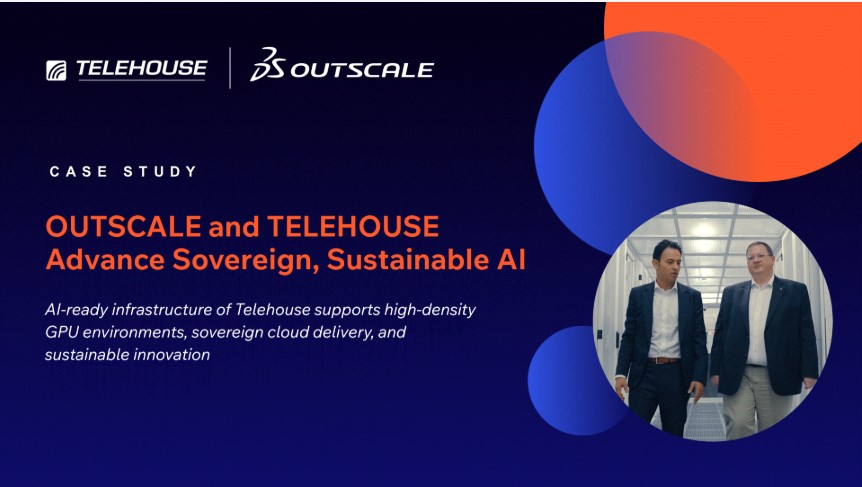

OUTSCALE and TELEHOUSE Advance Sovereign, Sustainable AI

Discover how OUTSCALE, a Dassault Systèmes brand, collaborates with Telehouse to deliver sovereign, secure, and sustainable AI infrastructure. In this customer testimonial, learn how evolving AI demands from high-density GPU environments to strict data governance are being addressed through close collaboration and innovative data centre design.

Watch the full video to hear firsthand insights and download the full case study to explore how this partnership is advancing AI-ready infrastructure, liquid cooling capabilities, and sovereign cloud solutions.

Global Webinar – 2026 Priorities: The Global Infrastructure Trends Shaping the Boardroom Agenda

Boards and senior leaders around the globe are making long-term infrastructure decisions with power constraints firmly at the forefront. Extended grid connection timelines are putting pressure on delivery plans, while sustainability expectations continue to rise alongside accelerating AI-driven demand.

In this webinar, Telehouse host Nick Layzell is joined by experts from JLL and CBRE to examine the widening gap between infrastructure ambition versus delivery reality for 2026 and beyond.

Designed for CIOs and senior leaders responsible for long-term infrastructure strategy, the webinar provides practical insight into navigating today’s biggest data centre constraints to make smarter, feasibility-first decisions. You’ll understand how power availability is shaping site selection and timelines, what “AI-ready” really demands in terms of infrastructure and design, and how leading organizations are securing long-term capacity with greater certainty.

Key topics include:

  • 2026 board imperatives: locking in power certainty, enabling flexibility, and embedding connectivity from the outset
  • Prioritising deliverability in site selection: planning realities and viable routes to power
  • Making “AI-ready” tangible: power strategy, cooling design, and workload density considerations
  • Sustainability expectations: securing renewable supply and planning for long-term strategy

Featuring:

  • Moderator: Nick Layzell, Customer Excellence Director, Telehouse Europe
  • Catriona Shearer, Global Head, Data Centre Consulting, JLL
  • Keith Breed, Associate Director, Europe Data Centre Solutions, CBRE

How Carrier-Neutral Colocation Boosts Business Flexibility

As organizations respond to evolving digital, operational, and geographic demands, flexibility in network infrastructure has become increasingly important. Carrier‑neutral colocation allows organizations to select, add, or adjust network providers without being tied to a single carrier or constrained by long‑term architectural decisions. By enabling flexibility in carrier choice without requiring changes to physical infrastructure, this model gives businesses greater control over how their networks evolve in line with changing business needs. Discover how hosting in a carrier-neutral colocation environment can provide a resilient, flexible foundation that supports growth, innovation, and evolving business requirements.

Empowering Business Agility with Unmatched Connectivity Choice

In today’s hyper-connected business environment, the ability to pivot quickly and respond to market demands can mean the difference between leading your industry and falling behind. Carrier-neutral colocation services deliver this agility by eliminating vendor lock-in and providing access to a diverse ecosystem of connectivity partners. Rather than being tethered to a single carrier’s infrastructure, pricing, and service limitations, organizations gain the freedom to select from multiple network providers, negotiate competitive rates, and implement the exact connectivity solutions their business requires.

This flexibility extends beyond simple cost optimization. When your infrastructure resides in a carrier-neutral facility, you can deploy multi-carrier strategies that align with specific business objectives—whether that’s reaching new markets, supporting distributed teams, or enabling direct connections to cloud service providers. The ability to add or change carriers without physical relocation or significant infrastructure overhaul means your network can evolve at the pace of your business, not at the pace dictated by contracts or technical constraints.

For enterprises operating in sectors like financial services, e-commerce, or media delivery, where milliseconds matter and service disruptions can have significant revenue impact, carrier-neutral colocation provides the architectural foundation for truly adaptive infrastructure. You’re not just colocating equipment—you’re positioning your organization within a dense interconnection ecosystem where opportunities for optimization, innovation, and competitive advantage are continuously available.

Building Resilient Networks with Diverse Interconnection Paths

Network resilience is no longer a luxury—it’s a business imperative. Organizations across regulated industries, cloud services, and mission-critical operations require infrastructure that can withstand failures, cyberattacks, and unexpected disruptions without compromising service delivery. Carrier-neutral colocation facilities address this need by offering diverse interconnection paths that eliminate single points of failure and create redundant network architectures capable of maintaining 99.999% uptime.

Within a carrier-neutral environment, businesses can establish connections with multiple carriers across geographically diverse routes, ensuring that if one path experiences degradation or outage, traffic automatically reroutes through alternative connections. This diversity extends to physical infrastructure as well—facilities with multiple fiber entry points, diverse power feeds, and interconnected data centre locations provide layers of redundancy. For disaster recovery planning, this means the ability to implement geo-diverse failover strategies with dark fibre replication between sites, enabling rapid recovery and business continuity.

The resilience benefits multiply when organizations leverage peering relationships available in carrier-neutral facilities. Direct connections to Internet exchanges and major carriers reduce dependency on transit providers and create more direct, stable paths for critical traffic. Network engineers can architect solutions that balance performance, cost, and reliability across multiple providers, building networks that are not just resilient to failures but optimized for the specific availability requirements of each workload and application.

Maximizing Network Value with Flexible Carrier Partnerships

The economic advantages of carrier-neutral colocation extend far beyond initial cost comparisons. When organizations have access to multiple carriers within a single facility, they gain significant negotiating leverage and can implement strategic partnerships that maximize network value across every dimension—price, performance, service level agreements, and specialized capabilities. This competitive marketplace dynamic promotes enhanced service quality and favorable pricing.

Flexibility in carrier partnerships enables sophisticated network strategies that align costs with business value. Organizations can implement tiered connectivity models where mission-critical traffic travels across premium, low-latency connections while less sensitive data flows through cost-optimized paths. As business needs evolve—whether scaling for growth, entering new markets, or adopting emerging technologies like 5G and edge computing—the ability to quickly onboard new connectivity partners or adjust bandwidth allocations without infrastructure changes translates to both operational efficiency and financial optimization.

For procurement managers and infrastructure leaders balancing budget constraints with performance requirements, carrier-neutral facilities provide unprecedented flexibility to right-size connectivity investments. You can begin with baseline connectivity and scale incrementally as demand evolves, introduce additional services as requirements change, and take advantage of pricing options over time to manage total cost of ownership. This approach transforms network infrastructure from a fixed cost center into a dynamic, optimizable asset that directly supports business objectives.

Accelerating Cloud and Edge Deployment with Diverse Connectivity Options

The shift to hybrid and multi-cloud architectures has fundamentally changed how organizations approach connectivity. Rather than backhauling all traffic through corporate data centres or relying on unpredictable public Internet paths, modern enterprises require direct, high-bandwidth connections to cloud service providers that deliver consistent performance and security. Carrier-neutral colocation facilities serve as strategic on-ramps to major cloud platforms, enabling organizations to bypass the public Internet and establish dedicated private connections that minimize latency, reduce costs, and improve application performance.

These direct cloud connections become even more powerful when combined with carrier diversity. Organizations can establish redundant paths to cloud providers, ensuring high availability for cloud-dependent applications. For AI and machine learning (ML) workloads that require high-throughput data transfer between on-premises GPU infrastructure and cloud-based training environments, or for real-time applications like content delivery and financial trading where every millisecond counts, the combination of resilient colocation environment and diverse cloud connectivity options creates infrastructure capable of supporting the most demanding requirements.

Edge computing strategies benefit equally from carrier-neutral positioning. As organizations deploy distributed computing resources closer to end users—whether for 5G applications, IoT processing, or content delivery optimization—the ability to interconnect edge locations through diverse carriers and direct peering relationships becomes critical. Carrier-neutral facilities with high interconnection density and access to multiple network operators provide the architectural foundation for edge deployments that are both performant and resilient, enabling organizations to deliver consistent user experiences across distributed infrastructure while maintaining centralized management and security controls.

Future-Proofing Your Network Infrastructure for Evolving Business Demands

Technology evolution occurs at an accelerating pace, and infrastructure decisions made today must accommodate requirements that may not yet be fully defined. Carrier-neutral colocation provides the architectural flexibility necessary to adapt to emerging technologies, changing business models, and evolving regulatory requirements without requiring costly infrastructure replacements or facility migrations. As new carriers enter the market, connectivity technologies advance, and business needs shift, organizations positioned in carrier-neutral facilities can adopt innovations incrementally rather than facing disruptive forklift upgrades.

This future-ready approach is particularly valuable as organizations navigate major technology transitions—from traditional networking to software-defined infrastructure, from centralized computing to distributed edge architectures, from IPv4 to IPv6, and from copper to fiber and beyond. The ability to test and integrate new connectivity options, experiment with emerging technologies like quantum-resistant encryption or advanced routing protocols, and scale infrastructure to support AI workloads and high-density computing ensures that your network infrastructure remains a competitive asset rather than becoming a limiting factor.

For infrastructure leaders responsible for multi-year technology roadmaps, carrier-neutral colocation represents a strategic investment in adaptability. Rather than predicting exactly which carriers, technologies, or architectures will dominate in five years, you’re building infrastructure that can accommodate multiple scenarios. This approach reduces risk, preserves capital by avoiding premature obsolescence, and ensures that as your business evolves—whether through organic growth, mergers and acquisitions, geographic expansion, or market pivots—your network infrastructure can evolve in lockstep. In an era defined by digital transformation and rapid technological change, this flexibility is not just an operational advantage—it’s a fundamental requirement for sustained competitive success.

Experience the Telehouse Canada Difference

Carrier‑neutral colocation provides a strong foundation for organizations seeking flexible, resilient, and scalable connectivity. Telehouse Canada stands out as a leading carrier‑neutral data centre provider in Canada, offering a dense ecosystem of network carriers, cloud service providers, AI platforms, and interconnection partners.

Designed with a long‑standing focus on interconnection‑driven data centre architecture, Telehouse Canada enables businesses to deploy and adapt connectivity strategies within a highly connected, secure data centre campus. This environment supports evolving requirements across hybrid cloud, AI workloads, low‑latency connectivity, and multi‑carrier network architectures—helping organizations align infrastructure decisions with long‑term business objectives.

To learn more about Telehouse Canada’s carrier‑neutral colocation services, interconnection capabilities, and data centre solutions, visit our website.

Data Sovereignty-a key principle for digital infrastructure

by Mark Pestridge, Executive Vice President and General Manager, Telehouse Europe; Sami Slim, CEO, Telehouse France and Takeyuki Yanagisawa, General Manager, Telehouse Business Planning Department, KDDI

As digital ecosystems expand, data sovereignty has emerged as a critical factor in how infrastructure is built and governed. For businesses, the challenge is finding the right balance: infrastructure must enable global collaboration while complying with local regulations, ensuring data privacy and security.

This balance is becoming increasingly important as breaches of data sovereignty laws become more common. Authorities in Europe have levied billions of euros in fines under GDPR, with similar enforcement actions emerging across North America, Asia-Pacific, Latin America, and the Middle East. This growing trend underscores the need for strict adherence to local regulations on data residency and transfer.

Countries including India, Vietnam, and Brazil have adopted stricter rules, mandating that certain datasets remain within their national borders or are transferred under defined conditions. These regulations shape architectural decisions, raising expectations for data centre operators. Now, capacity alone is insufficient – customers demand clarity and confidence around data sovereignty from day one.

This growing complexity has driven demand for carrier-neutral, multi-cloud environments that combine dense connectivity with proven compliance. Such environments allow businesses to match workloads with jurisdictions, maintain in-country data storage, and meet legal obligations without redesigning entire infrastructures.

As regulatory frameworks evolve, the location and ownership of infrastructure increasingly influence governance. The jurisdiction of the infrastructure operator determines which legal regimes apply to data, shaping privacy considerations and how extraterritorial claims are handled. This means data centres must be built for adaptability, able to evolve as technologies and regulations change.

Regulatory drivers

Regulatory requirements are increasingly shaping data centre design, especially in heavily regulated sectors like financial services. For example, the Digital Operational Resilience Act (DORA), applicable from January 2025, requires regulated financial entities and their technology partners, such as data centres, to evidence that they can withstand disruption and report incidents swiftly.

This sets a broader global trend – international standards are moving toward simplifying cross-border compliance, while also addressing rising expectations for cybersecurity and sustainability.

ISO/IEC 27001 (information security) and ISO/IEC 27701 (privacy management) are frequently requested certifications that align with EU regulations, including NIS2 and DORA. Similarly, the NIST Cybersecurity Framework provides a common approach for risk management, helping stakeholders maintain consistent practices as they scale operations across borders.

While international standards provide some consistency, data sovereignty rules are still fragmented. For instance, while GDPR remains the baseline across Europe, individual member states impose stricter local provisions. Meanwhile, countries like China and Japan have their own data sovereignty laws, with varying levels of control over cross-border data transfers.

Regional perspectives

Each region has unique data sovereignty requirements. In France, hosting personal health data requires Health Data Hosting certification, and the updated scheme requires physical hosting within the EEA with defined controls.

In the UK, data centres are now designated as Critical National Infrastructure, and the Cyber Security and Resilience Bill is expected to tighten incident-reporting and supply chain requirements. Meanwhile, Japan has strengthened its data protection laws, tightening restrictions on third-country data transfers. Amendments to the Act on the Protection of Personal Information which sits alongside the EU–Japan agreement for an economic partnership ensures a trusted flow of data between the two regions.

Design strategies for adaptability

As regulatory frameworks evolve, data centres must become more adaptable. Modular designs, which support for phased construction and retrofitting, are increasingly common. This approach enables operators to accommodate changing regulations and customer demands without major redesigns.                                                                                                   

Modular designs also contribute to sustainability goals, with high-density zones ready for AI and liquid cooling, and reduced PUE (Power Usage Effectiveness), CUE (Carbon Usage Effectiveness), and WUE (Water Usage Effectiveness). Carrier-neutral campuses, which support multiple cloud and telecom providers, enable businesses to meet regulatory requirements while minimising vendor lock-in.

Collaboration and ecosystem partnerships

While infrastructure design sets the foundation, achieving effective data sovereignty requires collaboration across multiple partners. No single operator can meet all regulatory demands, which is why a connected ecosystem is crucial. This includes collaboration between carrier networks, cloud service providers, and security partners to ensure resilience, performance, and compliance.

Dense carrier ecosystems and Internet Exchange Points (IXPs) provide short, diverse paths to users, reducing latency and dependence to a single provider. At the same time, hyperscale cloud platforms and private cloud on-ramps offer predictable performance for regulated workloads and enable secure, direct data transfers for emerging technologies like AI.

In addition to these technical partnerships, legal and compliance tools like Standard Contractual Clauses (SCCs) and data processing agreements further support transparency and accountability , ensuring data is handled in accordance with regulations.

The road ahead

As data sovereignty becomes an integral part of infrastructure design, operators must focus on providing flexibility, transparency, and compliance. By combining modular designs, carrier-neutral interconnection, and recognised standards, businesses can build infrastructures that not only comply with current laws but also adapt as regulations evolve.

In this way, data sovereignty is no longer a challenge to work around. It is a design principle that ensures infrastructure can evolve with the geopolitical landscape, supporting innovation while keeping data secure and compliant.

Looking Ahead: Key Data Centre Trends Shaping 2026

According to the market research, the Canadian data centre market is expected to more than double by 2030.  As growth accelerates in 2026 and beyond, operators must accommodate expanding workloads, evolving regulatory requirements, sustainability targets, and rising customer expectations. With demand reaching new highs and oversight intensifying, they face the ongoing challenge of balancing operational efficiency with long‑term financial goals. 

As the year begins, we will explore what is working, what remains unresolved, and data centre trends that will shape the industry in 2026. 

Trend #1: Significant AI-related infrastructure growth and solutions 

AI continues to be the primary driver of new data centre investment. In fact, Citigroup estimates that AI-related infrastructure spend will reach $490 billion by the end of 2026. As GPUs become more optimized within servers and rely on fast networks and storage to perform thousands of calculations in parallel, they will also demand more than traditional servers. As a result, data centre operators are being pushed to provide higher-density power and more advanced cooling solutions to keep up with AI workloads. The demand for GPUs will continue to expand across sectors such as finance, government, and automotive. 

Impact: The emergence of mega campuses  

The concept of scale has evolved in 2026, with mega data centre campuses continuing to emerge. Rather than operating as single facilities, mega campuses act more like digital cities, often featuring 8 to 12 data halls built across multiple phases and adding 50 to 100 MW of capacity. These campuses increasingly include high-voltage substations and renewable microgrids to reduce already constrained electrical grids. Designed to support high-performance computing, AI training models, and clouds, these multi-building campuses are expected to continue expanding throughout the year. According to datacenters.com, a single training deployment consumes more electricity than a small city. By aggregating demand at scale, mega campuses allow operators to manage energy use more strategically. 

Impact: Advanced Cooling Solutions 

As GPU demand outpaces the capabilities of traditional cooling methods, the industry is seeing two primary cooling solutions roll out this year: liquid-to-chip cooling and rear-door chillers. Liquid-to-chip cooling delivers liquid directly to the server’s hottest components, such GPU chips, allowing data centres to operate more efficiently while supporting higher power densities. Rear-door chillers are mounted on the back of server racks and remove heat before it enters the data centre room, capturing heat at the source rather than overcooling the entire space.  

Beyond sustainability practices, these approaches can help lower operational costs, making them well suited for intense workloads. According to Data Centre Magazine cooling accounts for up to 30 per cent of a data centre’s total energy use. Global cooling energy consumption is forecasted to rise from 136 TWh to 257 TWh by 2028, with costs expected to increase from $19 billion to $36 billion. As cooling demands continue to rise, efficiency gains will play a critical role in managing both energy use and long-term operating costs. 

Trend #2: Sustainability Takes Center Stage with a Strong Shift Toward Renewable Energy 

Data centres continue to shift toward renewable energy sources as part of a broader, sustainability‑driven operating model.  Many operators incorporate on‑site solar generation—often paired with battery storage—to help offset daytime loads, particularly in regions with strong solar availability. Meanwhile, in windy regions, data centre companies are buying electricity produced by wind farms through Power Purchase Agreements.  

However, renewable energy sourcing represents only one aspect of how sustainability is evaluated across the industry. Investors, customers, and regulators are placing greater emphasis on measurable sustainability performance, driving the adoption of standardized metrics that extend beyond energy procurement. As a result, sustainability performance is increasingly assessed using three key metrics: 

  1. Carbon Usage Effectiveness (CUE), which measures the amount of greenhouse gas emissions produced per unit of IT energy consumed within a data centre and helps quantify decarbonization progress. 
  1. Water Usage Effectiveness (WUE), which quantifies how efficient data centres use water, expressed as cubic metres of water per megawatt hour of energy (m3/MWh). 
  1. Life Cycle Assessment (LCA), a standardized method used to measure environmental impact across the entire lifecycle, from raw material extraction to manufacturing, transportation, and deployment. Data from these metrics are increasingly being used to inform how data centres are designed to reduce carbon, water, and energy use. 

Impact: Grid-Scale Energy Storage Gains Momentum in Ontario 

Energy storage is emerging as a critical component for supporting data centre growth while reducing strain on provincial power grids. Large-scale battery systems are increasingly being deployed and evaluated to store excess energy and provide reliable support during peak demand periods. These systems can help stabilize power supply, improve grid resilience, and support greater integration of renewable energy sources. 

At the same time, ensuring reliable, always-on power supply remains a top priority as electricity demand accelerates. Natural gas has emerged as one transitional option to help power data centres, supporting rising energy demands while helping reduce downtime risk. According to Enbridge, long-term demand for natural gas is expected to grow strongly through 2040, driven in part by data centre expansion.  As demand continues to rise, energy storage is expected to play a growing role in how data centres manage power availability and grid reliability. 

Impact: Digital twin technology  

As sustainability measurement becomes more data-driven, operators are increasingly turning to advanced modelling tools to better understand and optimize how energy is used across their facilities. 

Digital twin technology is gaining traction across the data centre industry, as well as in sectors such as healthcare, manufacturing and construction. Digital twins are virtual, real-time replicas of physical environments that allow operators to simulate energy flows, monitor performance, and optimize systems such as cooling and power distribution. By supporting more precise monitoring of energy, cooling, and resource consumption, these tools help data centres better anticipate changes, test scenarios, and understand how operational decisions impact overall performance and efficiency. 

Impact: Interest Grows in Low-Carbon Alternative Energy Sources 

Looking further ahead, sustainability considerations are also shaping long‑term energy planning. Data centre operators and energy developers are increasingly exploring low-carbon alternatives to support long-term growth and rising power demands. Naturally occurring hydrogen has gained attention as a potential energy source due to its lower emission profile compared to traditional hydrogen production methods. When used, this form of hydrogen produces water vapour rather than carbon emissions into the air.  

While still in the early stages, continued exploration and innovation could influence future energy strategies for data centres over the longer term. In parallel, operators are increasingly focused on hybrid energy models that combine renewable sources, such as wind and solar, with microgrids and battery storage to improve resilience, flexibility and sustainability performance. 

Trend #3: Cyber Threats Continue to Be Stronger and More Frequent 

As data centre infrastructure scales in size and complexity, operational resilience and security are becoming just as critical as energy and sustainability considerations.  

The Canadian Centre for Cyber Security’s National Cyber Threat Assessment identifies trends so that Canadian organizations can prepare for and defend against emerging threats. Ransomware remains the top cybercrime threat facing Canada’s critical infrastructure, disrupting organizations’ ability to deliver essential services.  

As attacks increasingly operate at machine speed, organizations must be able to respond just as quickly. This is driving greater adoption of pre-emptive cybersecurity, which uses advanced AI-driven techniques to anticipate and neutralize cyberattacks before they occur. Rather than traditional detect-and-respond approaches, pre-emptive cybersecurity focuses on disrupting attacks before they can cause widespread damage. 

Impact: Proactive Cybersecurity and Resilient Data Centre Design Become Essential 

As cyber threats grow more frequent, sophisticated and automated, data centre cybersecurity is moving beyond reactive defense to a proactive, resilience‑first model. Traditional detect‑and‑respond approaches are no longer adequate in an environment where ransomware, supply‑chain attacks and AI‑enabled threats can disrupt critical digital infrastructure in real time. 

In response, operators are accelerating adoption of pre‑emptive, AI‑driven cybersecurity controls, including continuous threat monitoring, behavioural analytics and automated response capabilities. These technologies allow data centres to identify malicious activity earlier and reduce the operational impact of cyber incidents—an increasingly important requirement for cloud, AI and mission‑critical workloads. 

At the infrastructure level, stronger and more frequent attacks are reinforcing the importance of cyber resilience by design. Modern data centres are being engineered with network segmentation, redundancy, immutable backups and rapid recovery capabilities, ensuring services remain available even when security events occur. 

As a result, cybersecurity is now a central factor in infrastructure strategy and provider selection. Enterprises are prioritizing secure‑by‑design data centre environments that integrate physical security, cyber controls and operational best practices—positioning security as a foundational enabler of trust, availability and long‑term digital growth. 

Trend #4: Infrastructure Control and Sovereignty Become Strategic Priorities 

Regulatory requirements, rising geopolitical uncertainty and the rapid growth of AI‑driven workloads are pushing organizations to pay closer attention to where their data and infrastructure are hosted and the governance frameworks that apply to them. 

As data residency expectations tighten and AI workloads become more critical to business operations, organizations are prioritizing sovereign infrastructure, localized compute and greater transparency over infrastructure governance. This shift reflects a broader move away from one‑size‑fits‑all deployment models toward infrastructure strategies that emphasize control, compliance and operational resilience. 

Impact: Geopatriation Emerges. Edge Computing Accelerates. Site Diversification Increases. 

Geopatriation refers to the relocation of global hyperscale cloud workloads into local environments to reduce geopolitical risk and strengthen control over data and infrastructure. As data sovereignty expectations increase, organizations are placing greater emphasis on jurisdictional control, compliance alignment and infrastructure governance. 

In Canada, this trend is also reflected in efforts to strengthen sovereign digital infrastructure, including the development of domestic AI compute capabilities. The new “Canadian Sovereign AI Compute Strategy” to deploy $2 billion toward AI computing power and includes three models for data hosting: secure for government use, publicly available infrastructure and hybrid hosting model.  

At the same time, the rapid growth of AI and other latency-sensitive applications is accelerating demand for localized compute. Rather than relying solely on centralized cloud regions, workloads are increasingly being distributed across sovereign cloud environments, metro hubs and edge locations to balance governance, resilience and performance requirements. 

In response, operators are increasingly diversifying their geographic footprints to alleviate power grid congestion and leverage local renewable energy sources. 

At Telehouse Canada, staying ahead of data centre and colocation trends means understanding their broader impact on communities, businesses, and the environment. While technologies and demands continue to evolve, our focus remains unchanged. We remain committed to delivering dependable, future-ready data centre infrastructure that empowers organizations to innovate and grow. As demand continues to rise, the decisions made today will play a critical role in shaping Canada’s digital ecosystem in the years ahead. 

Telehouse Canada Partners with Megaport to Deliver Advanced Cloud Connectivity Solutions

The partnership enhances cross-border collaboration and unlocks new strategic connectivity capabilities for organizations within Telehouse Canada’s digital ecosystem.

TORONTO, ON – December 18, 2025 – Telehouse Canada, a leading data centre service provider subsidiary of the KDDI Group, has announced a strategic partnership with Megaport, a global leader in Network as a Service (NaaS). The partnership will bring advanced cloud connectivity options to Telehouse Canada data centres, enabling Telehouse Canada’s customers to access Megaport’s extensive global network ecosystem of more than 280 cloud on-ramps and over 300 service providers, delivering flexible, scalable connectivity to leading cloud platforms and global IT services.

Organizations within Telehouse Canada’s ecosystem can now easily build flexible, high-performance network architectures that support a range of workloads, including hybrid and multi-cloud environments. The Megaport Portal is accessible from all Telehouse Canada data centres, allowing businesses to establish private connections to global locations across the regions where Megaport operates.

Through Megaport’s global platform, the integration simplifies cloud networking by enabling on-demand scalability and improving operational efficiency. Organizations can access a broad range of connectivity services, including Megaport Cloud Routers for direct data transfer between multiple clouds, while API integration automates the deployment and management of scalable services.

“This partnership exemplifies the commitment Telehouse Canada and Megaport have to providing quality and efficient connectivity solutions,” said Atsushi Kubo, President and CEO of Telehouse Canada. “We’re proud to deliver more than colocation – we’re also enabling a highly interconnected ecosystem that empowers businesses to grow within our data centre campus. Telehouse Canada customers gain on-demand access to global services that simplify complexity and accelerate growth through Megaport’s platform.”

Organizations can also access Megaport’s AI Exchange (AIx) advanced ecosystem, designed to enhance connectivity for AI-driven organizations. This intuitive global platform enables seamless integration and instant access to leading GPUaaS providers, neoclouds, third-party AI models, storage and compute. AIx empowers organizations to seamlessly interconnect with AI resources while ensuring the rapid and reliable delivery of all global AI capabilities.

“Organizations are operating across more complex environments, where connectivity and compute need to work together seamlessly,” said Michael Reid, CEO of Megaport. “Working closely with Telehouse Canada allows us to extend that capability into a strong local ecosystem, giving organizations the foundations they need to support advanced workloads today and adapt as requirements evolve.”

Telehouse Canada and Megaport are committed to advancing their collaboration, working together to strengthen the digital foundations that support Canadian organizations. Together, they aim to help shape the future of secure, high-performance connectivity in Canada and beyond.

About Telehouse

Telehouse is a leading global data centre service provider under KDDI Group, bringing together a diverse range of business partners including carriers, mobile and content providers, enterprises, cloud providers and financial services companies. Established in 1989, Telehouse provides reliable, secure, and flexible colocation services, enabling organizations to accelerate speed to market and create business opportunities through fast, efficient and secure interconnections. For more information visit: www.telehouse.ca.

About Megaport

Megaport is changing how businesses connect their infrastructure, with one smart and simple platform to manage every connection. Build secure, scalable, and agile networks in just a few clicks, accessing global endpoints and creating private paths in minutes. Trusted by the world’s leading companies, Megaport partners with global service providers, DC operators, systems integrators, and managed services companies, and operates in 1000+ enabled locations worldwide. Megaport is ISO/IEC 27001 certified. Get connected at megaport.com.

Telehouse Canada media contact:
Kristina Ivashkova
Sales & Marketing
[email protected]

Megaport media contact:
Adam Hennessy
Senior Director – Brand & Communications
Phone: +61 7 3088 7400
[email protected]

Understanding Data Centre Certifications and Compliance Standards: A Guide to SOC 2 Type II, ISO/IEC 27001:2022, PCI DSS, GDPR and More

Security and compliance are the foundation of trust in today’s digital economy. For businesses that store large volumes of information, protecting data is both a regulatory and reputational necessity. For a colocation facility, one of the key responsibilities is to provide secure and resilient digital infrastructure that supports the critical mission systems of businesses. Research by PwC notes that 36 per cent of businesses experienced a data breach in 2024 compared to only 27 per cent in 2023. The financial impact can be significant. According to a recent survey by Splunk, one hour of downtime caused by a data breach can cost organizations roughly $540,000. With breaches on the rise, meeting global compliance standards has become essential to reducing risk, securing operations, and maintaining customer confidence.

Meeting these expectations starts with adhering to internationally recognized data centre certifications and compliance standards such as the GDPR, PIPEDA, SOC 2 Type II, PCI DSS, ISO/IEC 27001:2022, and CCPA. Together, these ensure that colocation facilities and operations are governed by rigorous safeguards, delivering consistent and reliable protection for client mission-critical systems.

SOC 2 Type II 

System and Organizations Control (SOC) reports were developed by the American Institute of Certified Public Accountants (AICPA) to evaluate service providers’ data management practices. The first report, SOC 1, focuses on internal controls over financial reporting, while SOC 2 assesses controls related to security, availability, processing integrity, confidentiality, and privacy. Organizations that store, process, or transmit customer data such as cloud storage services and data hosting providers like Telehouse Canada are expected to maintain SOC 2 compliance.  

Telehouse Canada complies with SOC 2 Type II. We undergo annual independent audits to validate our commitment to the Trust Service Principles (TSP) of Security, Availability, Processing Integrity, and Confidentiality. For businesses operating in cloud or SaaS environments, SOC 2 Type II provides assurance that our infrastructure meets rigorous industry standards, helping you deliver reliable services with confidence. 

ISO/IEC 27001:2022 

ISO/IEC 270001:2022 is the global standard for information security management. It provides a systematic approach for managing sensitive information using a combination of people, processes, and technology. The standard is built on three principles: confidentiality, information integrity, and availability of data. ISO/IEC 270001:2022 compliance indicates that an organization has established a risk management process that identifies, assesses, and mitigates threats to data security. Telehouse Canada’s infrastructure is engineered to meet the highest international standards for security and reliability. ISO/IEC 27001:2022 ensures our systems follow globally recognized security protocols-giving businesses confidence that their environment is secure, continuously monitored, and professionally managed. 

Payment Card Industry Data Security Standard (PCI DSS) 

Developed by the Payment Card Industry Security Standards Council, the Payment Card Industry Data Security Standard (PCI DSS) is a requirement to protect payment card data. PCI DSS compliance minimizes the risk of fraud by ensuring that cardholder information is securely stored, transmitted, and processed. Although it is not a legal requirement, many financial institutions and payment processors require their partners and service providers to comply as part of their contractual obligations. The framework includes six guiding principles: building and maintaining a secure network, protecting cardholder data, maintaining a vulnerability management program, implementing strong access control measures, regularly monitoring and testing networks, and maintaining an information security policy. Any entity involved in payment card processing, including merchants, processers, issuers, and service providers should adhere to PCI DSS guidelines to maintain the trust of customers and financial partners.  

Telehouse Canada’s data centres adhere to PCI DSS standards, ensuring robust physical security. Our facilities undergo independent audits and are engineered to meet stringent industry requirements—helping organizations safeguard trust, achieve regulatory compliance, and operate with confidence. 

Personal Information Protection and Electronic Documents Act (PIPEDA) 

The Personal Information Protection and Electronic Documents Act (PIPEDA) is Canada’s federal privacy law. It governs how organizations collect, use, and disclose personal information for commercial activities. PIPEDA applies to all private sector organizations operating in Canada unless a province has its own similar legislation, such as in Alberta, British Columbia, or Québec. In those provinces, the local legislation governs most in-province activities, while PIPEDA continues to apply to interprovincial or international data transfers. Under PIPEDA, every organization must adhere to each of the 10 principles to protect information: accountability, identifying purposes, consent, limiting collection, limiting use, disclosure and retention, accuracy, safeguards, openness, individual access, and challenging compliance.  

By adhering to PIPEDA, companies demonstrate their commitment to protecting customer information and maintaining ethical data practices aligned with Canadian privacy expectations. At Telehouse Canada, our operations meet the requirements of PIPEDA, safeguarding data and aligning with Canadian privacy standards and Canadian data centre standards 

General Data Protection Regulation (GDPR)  

The General Data Protection Regulation (GDPR) is the European Union’s (UN) comprehensive data privacy law, introduced in 2018 to protect individuals’ personal information and standardize data practices across industries. This privacy law establishes obligations for both data controllers and processors, ensuring that data is collected, processed, and stored lawfully, transparently, and securely. The GDPR applies to organizations outside the EU if an organization offers goods or services to EU residents or if they monitor their online behaviour. Non-compliance can result in significant penalties, meaning data centres serving international clients must meet these standards. Additionally, organizations engaged in large-scale processing must also appoint data protection officers to conduct regular monitoring of data subjects on a large scale.  

Telehouse Canada delivers secure, resilient, and GDPR-compliant data centre infrastructure designed to protect customer’s most sensitive information. Our facilities uphold the highest standards of data privacy and security, giving organizations confidence that their infrastructure supports strict regulatory obligations. 

California Consumer Privacy Act (CCPA) 

The California Consumer Privacy Act (CCPA) is one of the most comprehensive privacy laws in the United States. It grants California residents specific rights regarding how their personal data is collected, shared, and sold. However, businesses do not need to have a physical presence in California to fall under the CCPA. The law applies to organizations that collect data from California consumers or meet certain thresholds related to revenue or data volume. Under the act, consumers have the right to know what personal information is being collected, request its deletion, and opt out of data sharing or sale. While Telehouse/KDDI has a data centre location in Los Angeles, regardless of the location, for businesses engaging with U.S. customers, Telehouse Canada’s infrastructure also supports CCPA compliance giving individuals control over their personal data and helping to meet privacy expectations confidently. 

Data centre compliance serves as the backbone of digital trust, protecting sensitive information while ensuring transparency and accountability. At Telehouse Canada, we uphold globally recognized certifications and compliance requirements, including SOC 2 Type II, PCI DSS, and ISO/IEC 27001:2022, while also aligning with GDPR, PIPEDA and CCPA. Each certification and compliance reinforces the integrity of our operations and gives customers confidence that their data is supported by compliant data centre infrastructure.  

To learn more about how our certified facilities safeguard sensitive information and ensure data centre compliance across our facilities, visit our website.

Why Colocation is Essential to Disaster Recovery Planning

A disaster recovery plan is an essential part of any business continuity strategy. It helps organizations maintain critical operations during unexpected disruptions. According to Queue.it, a one-hour outage can cost corporations an estimated $34 million in sales. While every business relies on data, downtime for the average business can cost $9,000 per minute or more, depending on the industry. In fact, Queue.it also reports that the percentage of single incidents costing over $100,000 has increased from 39 per cent in 2019 to 70 per cent in 2023.  

Disruptions can result from many factors, including power failure, networking equipment and server malfunction, or cyberattacks. These incidents highlight how vulnerable even advanced systems can be without a proper plan and preventive measures in place. Beyond lost revenue, prolonged downtime can damage an organization’s reputation, erode customer trust, and strain long-term relationships. 

Colocation Strengthens Disaster recovery  

In a data-driven economy, preventing disruptions and ensuring rapid recovery during crises are vital to reducing financial losses and safeguarding customer trust. Despite these risks, many organizations still rely on fragile in-house IT infrastructure for disaster recovery, leaving them exposed to costly outages and reputational harm.  

Colocating enhances organizational resilience and safeguards business continuity, especially when compared to relying solely on in-house IT infrastructure for disaster recovery. Telehouse Canada integrates disaster recovery planning into its operations to ensure business continuity and support customers in maintaining uptime during disruptions. Working with a colocation partner ensures that systems are supported in a secure, professionally managed environment. This reduces the burden on internal IT teams and improves response times during recovery. Colocation facilities also provide the scalability and connectivity needed to maintain operations during peak demand or unexpected interruptions. 

Key Benefits of a Colocated Disaster Recovery Strategy  

Cost-effectiveness: Partnering with a colocation provider eliminates the high costs and complexity of building an internal disaster recovery site.  

Resilience: Colocation environments are designed for uptime, offering controlled conditions, data centre redundancy, redundant power, and round-the-clock monitoring.  

Scalability: The ability to adjust capacity and resources as needs evolve gives businesses greater flexibility without sacrificing reliability.  

Expert support: With infrastructure managed by experts, organizations can maintain business continuity and focus on their customers and core objectives. 

How Carrier Hotel Data Centres Enhance Disaster recovery  

A business’ disaster recovery site must be secure and redundant. Telehouse Canada’s data centres are engineered with robust redundancy measures, delivering uninterrupted business continuity. 

Data centre geo-diversity 

Telehouse Canada’s three interconnected data centres across downtown Toronto provide geo-diverse disaster recovery sites that reduce the risk of localized failure. The dark fibre interconnection of our facilities is designed to handle the high network loads expected by high connectivity tenants while ensuring full redundancy. By distributing infrastructure across multiple locations, data can be processed closer to users, lowering latency and improving failover reliability. This multi-site approach allows seamless transition of workloads between facilities, ensuring service continuity in the event of regional disruptions.  

2N power redundancy and diverse routing  

Downtime from an outage can lead to a massive economic loss for large companies, highlighting the importance of data centre redundancy and high-availability infrastructure in maintaining business continuity. According to the U.S. Information Technology Intelligence Consulting, in 2024, one hour of downtime cost more than $300,000 for 90 per cent of businesses and between one to five million for 41 per cent of enterprises. This reinforces the value of designing infrastructure that can withstand unexpected failures. Redundancy ensures that when one component is offline, another can immediately take over. It is a defining feature of a resilient environment. Telehouse Canada sites include multiple backup generators, providing consistent performance and power supply even during extended utility outages. Our sites operate with a 2N Uninterrupted Power Supply (UPS) System and 2 diverse power feeds into facilities, allowing facilities to maintain full power during maintenance or equipment replacement. By maintaining two separate UPS systems, diverse power routing, and redundant fibre paths, Telehouse Canada minimizes single points of failure and strengthens data centre uptime reliability, ensuring continuous uptime for mission-critical systems.    

Data backups 

Routine backups safeguard data and applications from corruption, loss, or failure. They form the foundation of a dependable disaster recovery strategy. Automated systems reduce the risk of oversight while maintaining consistent copies of critical information. Off-site and geographically distributed storage options add another layer of protection, helping organizations remain operational during regional outages. At Telehouse Canada, backup environments are supported through geo-diverse colocation sites connected by dark fibre, enabling rapid data replication and restoration. 

Network segmentation and dark fibre interconnection 

Dividing network infrastructure into smaller segments limits exposure in the event of a breach. If one segment is compromised, the rest of the network remains unaffected. Segmentation improves both performance and security by restricting access to sensitive areas and simplifying incident response. Telehouse Canada’s high-capacity dark fibre interconnection links its three sites, implementing real-time replication and seamless failover between facilities. 

Compliance 

Telehouse Canada complies with the internationally recognized data centre certifications and compliance standards such as the GDPR, PIPEDA, SOC 2 Type II, PCI DSS, ISO/IEC 27001:2022, and CCPA, ensuring that client systems are protected by rigorous safeguards. Continuous 24/7/365 on-site security personnel and CCTV surveillance provide physical protection of facilities and customer equipment, while regular audits and monitoring detect vulnerabilities before they can be exploited. 

Peering 

Peering provides one-to-one connections between networks, enabling the direct exchange of traffic. Through network peering, traffic does not have to go through third-party IP transit providers reducing costs and increasing efficiency. Peering with leading Internet Service Providers (ISPs) at Telehouse Canada’s carrier-neutral data centre campus provides customers with low-latency network performance and rapid traffic rerouting in the event of disruptions. 

2N cooling configuration 

To ensure equipment stays safe and secure, it’s imperative to integrate proper data centre cooling systems. Cooling systems work by removing the excess heat and replacing it with cooler air. Our facilities at 151 Front St. W and 250 Front St. W in Toronto leverage Enwave’s Deep Lake Water Cooling System (DLWC), an innovative technology that uses the cold temperatures of Lake Ontario to cool our data centres. By leveraging the naturally cold temperatures of Lake Ontario instead of running a traditional mechanical cooling plant, the DLWC minimizes overall power consumption and improves efficiency and reliability. Telehouse Canada also integrates a 2N cooling configuration to align with industry best practices. This ensures that there is always additional cooling capacity available, even during maintenance or system upgrades, and if any interruption occurs to the DLWC system, a fully redundant mechanical plant seamlessly carries the full cooling load. 

Take a Proactive Approach 

Effective disaster recovery planning depends on preparation, testing, and continuous improvement. Organizations that take a proactive approach recover faster and with fewer losses. Partnering with a colocation provider such as Telehouse Canada ensures that critical infrastructure, data, and connectivity are supported by built-in redundancy and professional oversight. Investing in a comprehensive recovery strategy protects long-term business performance, customer trust, and organizational resilience.  

Telehouse Canada’s data centres provide secure, scalable environments designed to ensure business continuity and resilience. Contact us to learn how we can strengthen your continuity plan and disaster recovery strategy.

How modular infrastructure design in colocation facilities enables rapid, scalable deployments for AI and HPC

The digital economy is accelerating, and data centre providers are under mounting pressure to scale and advance their infrastructure to accommodate AI workloads, cloud computing, and data-intensive applications. Traditional data centre construction is slow, costly, and vulnerable to outside disruptions. To solve this, providers are turning to modular infrastructure – prefabricated components that can be reconfigured without major construction. These pre-engineered units are becoming a popular solution to meet AI workload demands and high-performance computing (HPC).

Market momentum is strong: InsightAce Analytic notes that as of 2024, the North American modular data centre market size was valued at $4.4 billion USD. Colocation providers are playing a key role in this growth by using modular approaches to deliver AI and HPC-ready environments faster with less disruption.

Modular vs. Traditional Colocation Design 

To understand why modular data centre and colocation approaches are gaining traction, it is helpful to compare them to traditional design. Traditional colocation facilities design relies on fixed infrastructure, with upgrades requiring costly retrofits or long construction projects. Modular infrastructure, by contrast, introduces pre-engineered units that can be deployed on-demand. This allows colocation providers to scale capacity for tenants in weeks or months, rather than years, while avoiding disruptions to existing customers. For tenants running AI clusters or GPU-intensive HPC workloads, this difference is critical – power and cooling can be added quickly without redesigning the entire facility. It also changes the economics – instead of large upfront capital investments, organizations can grow in phases with scalable colocation environments that expand as AI and HPC workloads increase.

Fully Modular Builds

One approach is the fully modular data centre build, where entire facilities are constructed from prefabricated units. Once completed, prebuilt modules are shipped to the desired location and assembled on-site. Since modules are built in a controlled factory environment, organizations benefit from consistent quality standards and avoid common construction risks such as weather-related delays—ensuring faster deployment and greater reliability. This “plug-and-play” model contrasts with traditional construction, which requires years of planning, permitting, and building before the facility becomes operational. While less common in colocation, these same principles can be applied to accelerate deployments for tenants who need rapid scale. 

Modular Components 

In most colocation scenarios, modularity is applied at the component level rather than through fully modular builds. Modular infrastructure is built from pre-constructed units that house the essential systems of a facility, such as power, IT hardware, and cooling.  

These prefabricated modules can be integrated as flexible building blocks for AI-ready colocation environments, allowing providers to expand capacity without disrupting existing tenants. 

Modular components can be rapidly deployed and integrated, significantly reducing the time needed to bring AI and HPC workloads online. This is especially valuable for addressing the need to scale quickly in response to growing computational demands. 

Additionally, modular infrastructure allows for precise scaling of power, cooling, and compute resources, enabling tailored environments for high-density AI/HPC clusters without overprovisioning or disrupting existing operations.

Power Pods and Skid Systems

Prefabricated power pods and power skids provide scalable power distribution. These modular systems arrive pre-tested and fully integrated, reducing installation time and minimizing on-site testing. Flex estimates this approach can cut cabling and testing time up to 70 per cent. These systems often combine switchgear and UPS systems, giving tenants faster access to the high-density power required for AI and HPC workloads. 

Modular Server Racks and Cable Trays

Modular racks enable infrastructure adaptability, because instead of rewiring upon expansion, the modules are already designed for deployment from the start. These modular racks allow incremental expansion or downsizing, supporting cost efficiency while adapting to changing tenant needs. These racks also allow for better equipment airflow since their configurations can optimize cable management, a critical factor when supporting GPU-heavy workloads. 

Cooling Modules

Cooling is imperative when supporting AI and HPC. Modular cooling units provide targeted thermal management for dense workloads, while flex power skids incorporate energy management systems that track power conditions across sites in real-time to optimize energy efficiency. By effectively monitoring and cooling servers, over time, these modules contribute to reduced system strain and a reduction in operational expenses. For AI and HPC clusters, modular cooling ensures that dense GPU environments remain stable and high performing.

Why Modular is Transforming Colocation

With these advantages in mind, it becomes clear why modular infrastructure is gaining momentum in colocation environments. When you sign a lease with a data centre operator or colocation facility, you’re able to leverage their existing infrastructure to power your operations. Modular design principles allow facilities to plan and scale customers without affecting existing operations. It allows colocation facilities to accommodate customers who need different power densities and timelines with greater flexibility.  

Additionally, modular infrastructure helps align supply with demand, avoiding overbuilding based on projections. For example, if an organization suddenly needs to scale up to support a new AI cluster, modular solutions enable that growth without redesigning an entire facility. This agility is especially valuable for AI and HPC projects, where workloads can spike unpredictably and require immediate access to high-density infrastructure.

Implications for AI and HPC Deployments

The clearest value of modular infrastructure emerges when considering advanced workloads like AI and HPC. Modular infrastructure solutions are transforming the way high-performance computing and AI clusters are deployed by emphasizing benefits like speed, scalability, flexibility, and cost-efficiency. Some customers are looking for a “microenvironment”: a tailored, pre-configured setup that aligns with their specific needs, whether for HPC, GPU-powered AI workloads, or specialized hosting. Modular infrastructure makes it possible to deploy these environments quickly and reliably, without the delays and complexities of traditional infrastructure builds. Pre-assembled modules accelerate timelines compared to traditional data centre construction, ensuring organizations can keep pace with demand. Modules can also be relocated or repurposed for temporary projects or seasonal peaks, providing additional flexibility.

Balancing Modular and Traditional Approaches 

The question for many organizations is whether modular infrastructure should replace traditional approaches or compliment them. Modular infrastructure in colocation environments is particularly effective for organizations that need rapid, scalable deployments—especially for AI and HPC workloads.  

Modular and traditional infrastructure are not mutually exclusive; in practice, they complement one another—offering a hybrid approach that combines the speed and flexibility of modular deployments with the reliability and long-term stability of traditional colocation. This synergy enables organizations to optimize performance, scale efficiently, and adapt to evolving requirements without compromising operational continuity or infrastructure integrity.   

As a colocation facility provider, Telehouse Canada offers a cost-effective alternative to building and maintaining proprietary data centres, eliminating the logistical complexities of managing infrastructure and operations. 

Our facilities give businesses direct access to key North American markets through scalable colocation options—including cabinets, cages, and private suites—backed by high-speed, low-latency connectivity engineered for reliability, redundancy, and seamless scalability. 

For organizations with specialized requirements, Telehouse Canada supports tailored deployments that balance flexibility with the stability of our robust colocation infrastructure.  

Conclusion 

As demand for AI and HPC accelerates and require high power densities per rack, advanced cooling options and reliable, low-latency network connectivity, organizations need flexible, future-ready infrastructure strategies, regardless of the model. At Telehouse Canada, our colocation environments are designed to support rapid deployment and scalability, enabling customers to meet evolving AI and HPC workload demands efficiently.  

Connect with Telehouse Canada to learn how colocation can support your AI and HPC strategy with speed, reliability, and scalability.