


 Colocation
 Data Centre Migration
 Remote Hands and Eyes
 Disaster Recovery
 Cross Connect
 Meet-Me Room (MMR)
 Access To Peering
 Cloud Connectivity
 Dedicated Internet Access
 Data Centre Interconnect
 AI Exchange
 151 Front Street West Data Centre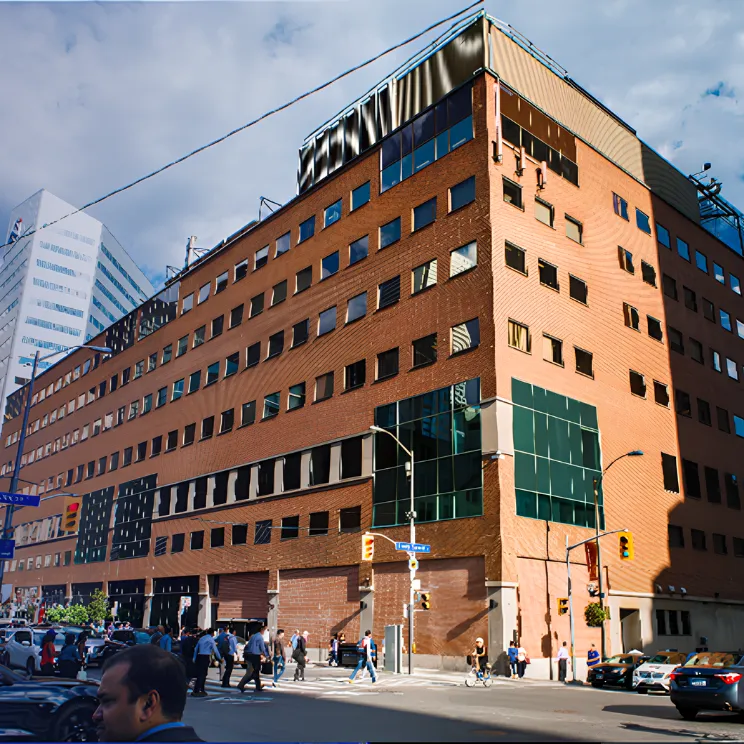

 About Us
 Careers
 Compliance
 Management Team
 Sustainablity
 Customer Portal
As AI continues to be deployed across industries, enterprises are struggling to keep up with the growing demands of compute power and infrastructure. According to Mckinsey & Company, data centre infrastructure spending is expected to exceed $1.7 trillion, driven in part by increasing AI demand. The training and inference workload demand worldwide is expected to reach 200 GW by 2030.
At the same time, the cloud computing landscape is evolving. While traditional cloud platforms have long dominated the market, a new category of infrastructure is emerging to address the unprecedented demands of artificial intelligence and high-performance computing workloads.
This shift has led to the rise of neoclouds, a new generation of infrastructure providers designed to support GPU-intensive and large-scale AI applications. As organizations increasingly deploy machine learning models, large language models, and GPU-intensive workloads, they’ve encountered limitations in traditional cloud architectures that were designed for different use cases, driving demand for more specialized solutions.
In fact, Cloud Syntrix reports that the recent industry surveys reveal that 25 per cent of enterprises are already using neoclouds, while 34 per cent are actively testing these platforms, reflecting broader changes across the data centre industry. At Telehouse Canada, we are seeing enterprises adopt hybrid approaches that combine traditional cloud services with neocloud platforms to support both conventional and emerging workloads.
What are Neoclouds?
Neoclouds, sometimes referred to as neo‑cloud providers or AI-first cloud providers, are a newer class of cloud infrastructure companies that focus on specialized, high‑performance, and cost‑efficient cloud services. Unlike traditional cloud providers that offer general-purpose computing resources, neocloud vendors are designed specifically to support GPU-intensive applications such as machine learning, large language models, and real-time inference. These platforms provide access to advanced GPU infrastructure, high-bandwidth networking, and architectures optimized for distributed computing, enabling organizations to process large datasets and train models more efficiently.
For enterprises evaluating their infrastructure options, neoclouds represent a strategic option for compute-intensive workloads, where performance, scalability, and speed are critical. Rather than replacing traditional cloud services, they are often used alongside them as part of a broader hybrid infrastructure approach, supported by carrier-neutral colocation environments that enable direct connectivity between platforms.
How Do They Work?
Neocloud providers purchase clusters of GPUs from companies and install them into specialized data centres. Companies can then rent GPU compute capacity from neocloud providers without needing to purchase and maintain the hardware themselves. In practice, this works like on-demand access to specialized infrastructure to speed up training or run large AI models in real time. Neocloud platforms are also designed for rapid provisioning, allowing organizations to access GPU resources quickly and deploy workloads without managing the underlying infrastructure. These services can be extremely powerful for simulations, robotics, and autonomous systems, as well. Some of the leading neocloud providers include CoreWeave, Nebius, and Vultr, to name a few.
Neoclouds operate on infrastructure specifically engineered for GPU-intensive computing. These environments rely on high-density racks equipped with the latest GPU accelerators—such as NVIDIA or AMD—supported by specialized power delivery systems and cooling technologies, such as liquid cooling, designed to handle high-performance AI workloads.
The networking layer in neocloud environments is equally important. High-bandwidth, low-latency connectivity enables efficient communication between GPU nodes during distributed AI workloads, where data transfer and synchronization can impact performance. Carrier-neutral data centres support this through direct, low-latency connections to cloud platforms, Internet exchanges, and other networks.
The Benefits of Neoclouds
The primary advantage of neoclouds is their performance optimization for AI and machine learning workloads. Organizations can benefit from faster training times, reduced inference latency, and more efficient use of compute resources compared to general-purpose cloud platforms. This enables faster development cycles and more advanced AI applications.
Companies can avoid upfront capital costs by renting Graphic Processing Units as a Service (GPUaaS) rather than buying the AI infrastructure themselves. This allows organizations to access and scale GPU capacity on demand without managing physical infrastructure. Pricing models are typically flexible, allowing companies to pay per hour, per GPU, or through reserved capacity. While on-demand pricing for GPU instances on traditional cloud platforms can be expensive, neocloud providers often offer more competitive pricing models specifically tailored to AI use cases. Cloud Syntrix notes that 33 per cent of enterprises face a 2-4 week wait time for GPU access from traditional cloud providers, highlighting the growing demand for more accessible AI infrastructure.
Neoclouds provide access to cutting-edge GPU technology with shorter adoption cycles, enabling faster experimentation and performance improvement. This is complemented by hybrid infrastructure strategies, where organizations combine neocloud platforms with traditional cloud services and on-premises systems.
Carrier-netural colocation facilities, like those operated by Telehouse Canada, support this approach by enabling direct interconnection between these environments. This allows organizations to build integrated infrastructure that can address latency requirements, data residency considerations, and diverse workload needs.
Why Choose Traditional Infrastructure if Neoclouds Exist?
Despite the impressive capabilities of neoclouds, traditional infrastructure remains essential for most enterprise workloads. General-purpose cloud platforms excel at supporting diverse range of applications, offering mature ecosystems of services that extend far beyond raw compute—including managed databases, serverless computing, comprehensive security services, and sophisticated orchestration tools. For organizations running conventional web applications, business intelligence platforms, ERP systems, or standard containerized microservices, they provide the right balance of functionality, scalability, and ease of management.
Regulatory compliance and data residency requirements also influence infrastructure decisions, particularly in industries such as financial services, healthcare, and government. These sectors often require greater control, security, and compliance, making colocation and hybrid models an important part of their infrastructure strategy. At Telehouse Canada, our infrastructure supports organizations meeting requirements for SOC 2 Type II, ISO/IEC 27001:2022, PCI DSS, GDPR, PIPEDA, and CCPA compliance—standards that ensure data handling meets regulatory obligations while maintaining the flexibility to integrate with both traditional cloud and neocloud platforms as workload requirements dictate.
In practice, most enterprises operate across diverse workloads that require different infrastructure approaches. Legacy applications, real-time trading systems, content delivery networks, and customer-facing web services all have distinct requirements that traditional infrastructure addresses effectively. The optimal strategy isn’t choosing between neoclouds and traditional infrastructure—it’s architecting a hybrid environment that leverages each platform’s strengths. Carrier-neutral colocation plays a key role in this approach, enabling direct connectivity between platforms and supporting a more integrated, flexible architecture.
Opportunities for Colocation and Data Centre Operators to Collaborate with Neocloud Vendors
Colocation and data centre operators play a strategic role in the neocloud ecosystem, providing the infrastructure required to support high-density GPU deployments, advanced cooling systems, and strong interconnection capabilities. As demand for AI workloads grows, neocloud providers increasingly rely on these environments to deploy and scale their platforms.
Data centre operators can attract neocloud providers by offering infrastructure specifically designed for AI workloads—including high rack power densities, liquid cooling readiness, diverse and redundant power feeds, and low latency networking capabilities. This creates a mutually beneficial relationship: neocloud providers gain rapid access to scalable, AI‑ready environments and establish a presence at the edge without the burden of building and operating dedicated facilities, while colocation operators strengthen their platform and appeal to enterprises pursuing hybrid and AI‑driven strategies—and seeking proximity to leading AI ecosystems.
As AI infrastructure expands, partnerships between neocloud providers and data centre operators are likely to become increasingly common.
Interconnection is a critical component of this model. Organizations running AI workloads require seamless connectivity between neocloud platforms, traditional cloud providers, on-premises systems, and partner networks. Carrier- and network -neutral data centres enable and facilitate this through direct access to Internet exchanges, network carriers, and public cloud on‑ramps via a simple cross‑connect setup, reducing complexity and improving performance. At Telehouse Canada, our interconnected Toronto data centres provide onsite access to a dense interconnection ecosystem of 200+ connectivity players, supporting distributed architectures and enabling organizations to run AI workloads efficiently while staying closely connected to their broader digital ecosystem.
Colocation facilities with strong regional presence, like Telehouse Canada’s Toronto locations, can serve as strategic nodes in distributed AI architectures—hosting neocloud infrastructure for latency-sensitive processing while maintaining connections to centralized training environments and traditional cloud services for comprehensive workload support.
What’s in Store for the Future of Neoclouds?
The emergence of neoclouds illustrates how rapidly the AI industry is evolving. As infrastructure moves beyond general purpose computing toward specialized services, innovation will increasingly depend on the availability and affordability of compute capacity. The industry can expect to see more partnerships between neocloud providers and data centre operators as the need for quick access to specialized infrastructure grows.
Advanced cooling technologies will also continue to grow to manage the heat and power demands of dense GPU clusters. Whether neoclouds will expand services beyond GPUs remains to be seen. However, one thing is clear: neoclouds are playing a growing role in expanding access to AI infrastructure.
Edge deployment represents a significant growth trajectory for neocloud infrastructure. As latency-sensitive AI applications proliferate—including autonomous systems, real-time video analysis, and industrial IoT—the need for distributed GPU computing at the edge becomes critical. This trend will drive neocloud vendors to deploy infrastructure in regional colocation facilities rather than concentrating resources in hyperscale locations.
Carrier‑ and network‑neutral data centres with strong regional connectivity and low‑latency access to major population centres and metro areas are emerging as strategic deployment points for edge‑oriented neocloud and AI services.
The combination of centralized training capabilities with distributed edge inference creates opportunities for comprehensive AI infrastructure strategies spanning multiple facility types and geographic locations.
As access to infrastructure expands, the facilities that support high-performance compute will become increasingly important. Telehouse Canada’s interconnected data centres provide the power, connectivity, and colocation environments needed to support dense GPU infrastructure and AI workloads.
Organizations exploring AI developments can contact Telehouse Canada to learn more about how our facilities support next-generation digital infrastructure: Contact Us | Telehouse Canada