Behind every fast, reliable digital experience is a complex network of connections working seamlessly behind the scenes. As demand continues to accelerate, global Internet traffic is growing by over 17% year over year, driven by cloud adoption, AI workloads, and data-intensive applications. More than traditional data centres, carrier hotels serve as powerful interconnection hubs that enable businesses to access a diverse range of connectivity players. Understanding their role is essential for organizations looking to develop scalable, future-ready digital infrastructure.
What is a carrier hotel?
A carrier hotel is a specialized data centre facility where multiple telecommunications carriers, Internet Service Providers (ISPs), and network service providers converge to establish physical interconnections. These facilities serve as critical infrastructure hubs that enable diverse network operators to connect their equipment and exchange traffic efficiently. Unlike many traditional data centres that primarily focus on hosting servers and storage, carrier hotels are designed to prioritize dense interconnection, serving as neutral hubs where carriers, cloud providers, and enterprises can establish direct peering relationships and cross-connections.
The strategic importance of carrier hotels has grown exponentially as businesses demand higher bandwidth, lower latency, and more resilient connectivity options. By concentrating multiple network providers in a single location, carrier hotels eliminate the need for costly and time-consuming point-to-point connections between disparate facilities. This concentration creates a network effect where each additional carrier increases the value proposition for all participants in the ecosystem.
Telehouse Canada owns and operates Canada’s largest carrier hotel, 151 Front Street West, providing enterprises with access to an extensive ecosystem of more than 200 connectivity partners. This carrier-neutral infrastructure in downtown Toronto hosts over half of Canada’s carriers and service providers, creating an unparalleled interconnection density that positions businesses to rapidly establish connections with leading telecommunications providers, cloud service providers, and content delivery networks. The facility’s interconnected meet-me rooms facilitate seamless cross-connections, enabling organizations to build redundant, high-performance network architectures that support mission-critical operations.
The Strategic Advantages of Carrier-Neutral Infrastructure
Carrier neutrality represents a fundamental principle that distinguishes premier carrier hotels from carrier-owned facilities. In a carrier-neutral environment, no single telecommunications provider holds preferential status or exclusive access rights. This independence empowers enterprises to select connectivity providers based on performance, cost, and service quality rather than facility restrictions. Organizations gain the flexibility to implement multi-carrier strategies that eliminate vendor lock-in and provide negotiating leverage when establishing service agreements.
The economic advantages of carrier-neutral infrastructure extend beyond initial cost savings. Businesses colocated in carrier hotels can rapidly adapt to changing connectivity requirements without facility migrations or infrastructure overhauls. When performance issues arise with an existing carrier, organizations can quickly establish connections with alternative providers already present in the facility. This agility proves particularly valuable during periods of rapid growth, geographic expansion, or digital transformation initiatives that demand increased bandwidth and enhanced network capabilities.
Telehouse Canada’s carrier-neutral colocation spaces exemplify these strategic advantages. The diverse ecosystem includes Tier-1 carriers, regional telecommunications providers, Internet exchanges, and direct connections to hyperscale cloud platforms including Microsoft Azure ExpressRoute and Amazon Web Services Direct Connect. The partnership with Megaport further extends global network connectivity options, enabling businesses to establish software-defined network connections to cloud on-ramps worldwide. This depth of connectivity options ensures that enterprises can architect network solutions precisely aligned with their performance, redundancy, and compliance requirements.
How Carrier Hotels Enable Enterprise Network Performance
Network performance optimization begins with physical proximity between interconnected systems. Carrier hotels minimize latency by enabling direct cross-connects between colocated equipment and carrier networks within the same facility. These physical connections, typically implemented through fiber optic cross-connects, eliminate multiple network hops and reduce signal delays that accumulate when traffic traverses geographically dispersed infrastructure. For latency-sensitive applications including financial trading systems, real-time analytics platforms, and artificial intelligence workloads, these microsecond improvements translate into competitive advantages and enhanced user experiences.
The interconnection density characteristic of leading carrier hotels creates opportunities for network architecture optimization that extend beyond simple latency reduction. Enterprises can implement diverse path routing strategies that establish primary and backup connectivity through separate carriers, creating resilient network topologies that maintain service continuity during carrier outages or infrastructure failures. The ability to establish multiple simultaneous connections with different carriers enables sophisticated traffic engineering approaches, including load balancing across providers and dynamic failover mechanisms that automatically reroute traffic when performance degradation occurs.
Telehouse Canada’s three interconnected downtown Toronto data centres, linked by dark fiber, provide geo-diverse deployment options that enhance performance and resilience. Organizations can distribute workloads across sites while maintaining low-latency interconnection, supporting high availability and disaster recovery. With direct access to major Internet Exchange Points (IXPs) such as TorIX, CANIX, and MegaIX, businesses benefit from low-latency, high-throughput peering, optimized traffic routing, and reduced reliance on IP transit. Backed by a 99.999% uptime SLA, the infrastructure supports reliable deployment of mission-critical systems.
Security and Compliance in Carrier Hotel Environments
Security considerations in carrier hotel environments encompass both physical infrastructure protection and network security measures. Premier carrier hotels implement multi-layered physical security controls including biometric access systems, mantrap entry points, video surveillance networks, and 24/7/365 on-site security personnel. These measures prevent unauthorized access to sensitive telecommunications infrastructure and customer equipment. The concentration of multiple carriers and service providers in shared facilities necessitates rigorous access control protocols that ensure each organization’s equipment remains isolated and protected from potential threats posed by other facility occupants.
Regulatory compliance represents another critical dimension of carrier hotel operations, particularly for organizations in heavily regulated industries including financial services, healthcare, and government sectors. Leading carrier hotels maintain comprehensive compliance certifications that demonstrate adherence to international standards governing data security, privacy protection, and operational resilience. These certifications provide assurance to enterprises that their critical infrastructure resides in facilities meeting rigorous audit requirements and implementing industry best practices for risk management and incident response.
Telehouse Canada addresses these security and compliance requirements through rigorous adherence to global data security and privacy standards, supported by independent audits and regulatory compliance verification. The facilities’ multi-layered security approach combines biometric access controls, video surveillance, 24/7/365 on-site monitoring, firewalls, multi-factor authentication, and proactive threat monitoring to protect customer infrastructure. For organizations requiring Canadian data sovereignty compliance, Telehouse Canada’s Toronto-based facilities ensure that data remains within national boundaries while providing access to international connectivity. This combination of physical security, operational controls, and compliance certifications enables enterprises to meet their regulatory obligations while maintaining the connectivity flexibility essential for digital business operations.
Selecting the Right Carrier Hotel for Your Business Requirements
Evaluating carrier hotel options requires careful consideration of multiple factors that directly impact network performance, operational costs, and long-term scalability. Interconnection density emerges as a primary selection criterion, as facilities with more diverse carrier populations provide greater flexibility and competitive pricing options. Organizations should assess not only the total number of carriers present but also the specific providers relevant to their connectivity strategy, including direct access to cloud service providers, Internet exchanges, and specialized network service providers serving their industry vertical.
Geographic location significantly influences both network performance and business continuity planning. Carrier hotels situated in major metropolitan areas with diverse fiber entrance paths offer superior resilience against infrastructure failures affecting specific geographic corridors. Proximity to key business operations, customer populations, and partner organizations affects application latency and data transfer efficiency. For organizations with distributed operations, carrier hotels that participate in interconnected campus environments or maintain connections to multiple geographic markets provide deployment flexibility that supports phased expansion strategies.
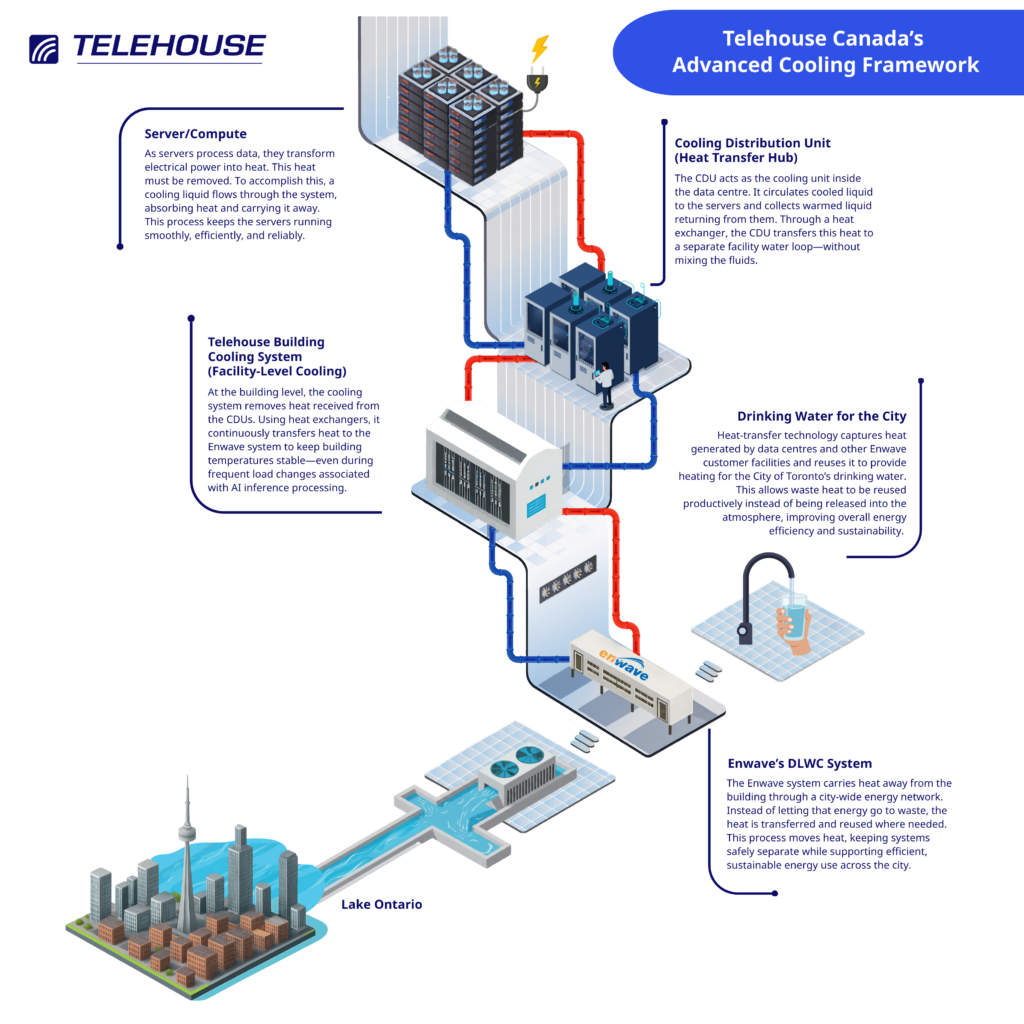
Telehouse Canada’s facilities make it a compelling choice for organizations prioritizing connectivity diversity and network performance. With more than 35 years of specialized global data centre expertise, the company brings deep operational knowledge to infrastructure management and customer support. The facilities’ sustainable operations, including advanced cooling solutions utilizing Enwave’s Deep Lake Water Cooling system, align with corporate environmental objectives while reducing operational costs. Responsive 24/7/365 on-site support and remote hands services ensure that technical issues receive rapid resolution, minimizing downtime that could impact business operations. For enterprises seeking to accelerate digital transformation, deploy AI workloads, or establish resilient multi-cloud connectivity, Telehouse Canada’s combination of dense interconnection, carrier-neutral infrastructure, and proven operational excellence provides the foundation for sustainable competitive advantage in an increasingly connected digital economy.
If you’re looking for a reliable data centre provider or want to learn more about Telehouse Canada’s carrier‑neutral colocation, interconnection capabilities, and data centre solutions, contact our team.