


 Colocation
 Data Centre Migration
 Remote Hands and Eyes
 Cross Connect
 Meet-Me Room (MMR)
 Access To Peering
 Cloud Connectivity
 Dedicated Internet Access
 Data Centre Interconnect
 AI Exchange
 151 Front Street West Data Centre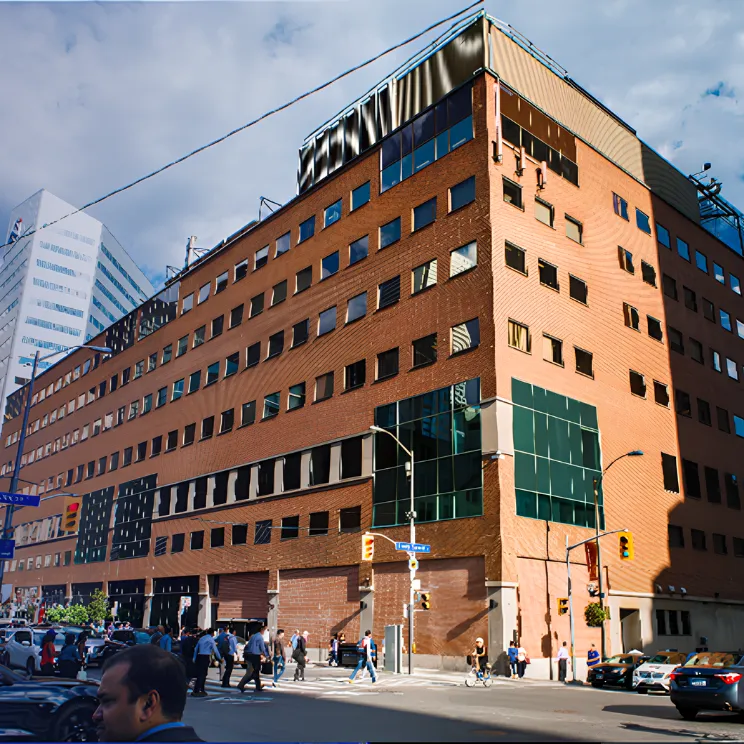

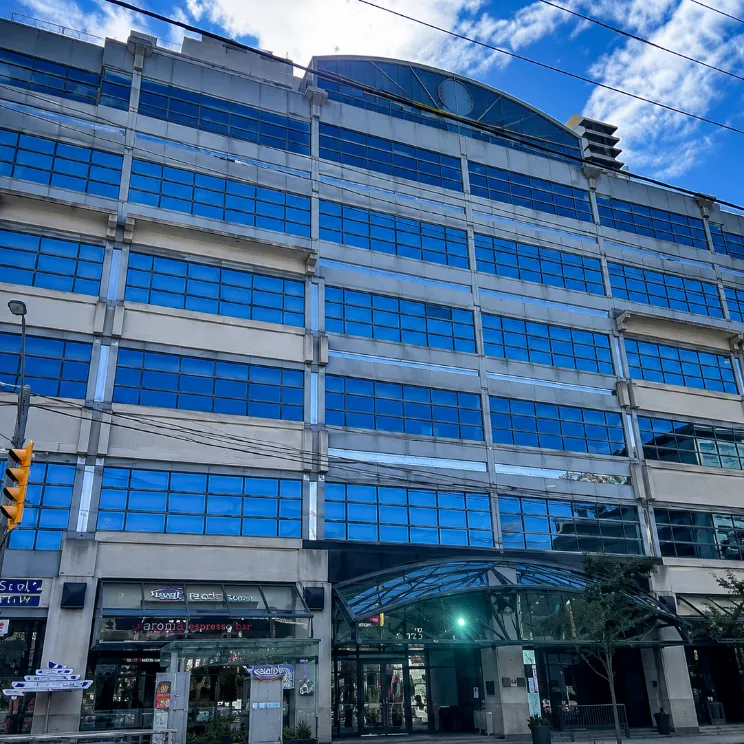
 About Us
 Careers
 Compliance
 Management Team
 Sustainablity
 Customer Portal
Data centres are the foundation of today’s digital economy, supporting everything from cloud computing and enterprise applications to artificial intelligence (AI) and real-time digital services. As organizations modernize their IT environments, selecting the right data centre strategy has become increasingly important for achieving performance, scalability, security and business growth objectives.
Not all data centres are built to serve the same purpose. Some are designed to provide organizations with greater control over their IT environments, while others are optimized for cloud-scale operations, AI workloads or low-latency applications. Understanding the different types of data centres can help businesses align their technology investments with current requirements while preparing for future demands.
What are the different types of data centres? The most common categories include colocation data centres, AI factories, hyperscale data centres, enterprise data centres and edge data centres. Each serves a distinct purpose and offers unique advantages depending on application requirements, performance expectations and growth plans.
In this guide, we’ll explore how these data centre models differ, where they’re typically deployed and how organizations can determine which approach best supports their long-term objectives.
Colocation Data Centres
A colocation data centre allows organizations to deploy their own servers and IT equipment within a professionally managed facility.
Rather than building and operating an on-premises data centre, businesses lease space, power, cooling and connectivity from a colocation provider while maintaining control over their equipment and applications. This approach provides access to enterprise-grade facilities without significant capital investment and operational overhead associated with managing a private facility.
Key Advantages:
- Reduced capital expenditure
- Enterprise-grade power, cooling and physical security
- Access to diverse carriers and cloud providers
- Flexible growth without building new facilities
Colocation data centres are commonly located in major metropolitan markets where businesses can benefit from proximity to carriers, cloud providers, internet exchanges and customers. These locations provide access to dense network ecosystems and support low-latency connectivity to critical business applications and services.
Colocation has become a preferred option for organizations seeking secure, scalable and carrier-neutral environments. By leveraging colocation services, businesses can improve resiliency, simplify operations and gain direct access to cloud platforms, network providers and interconnection ecosystems.
One of the primary advantages of colocation is connectivity. Carrier-neutral facilities allow organizations to choose from multiple providers, helping reduce dependence on a single network and providing greater flexibility as business requirements evolve.
At Telehouse Canada’s downtown Toronto data centre campus, customers gain access to one of Canada’s most interconnected ecosystems, connecting with more than 200 carriers, cloud providers, internet exchanges and technology partners. Located in the heart of Toronto, our carrier-neutral campus enables organizations to simplify network architecture, accelerate cloud adoption and build resilient, high-performance digital platforms.
Best Suited For:
Organizations pursuing hybrid cloud strategies, seeking greater network flexibility or looking to reduce the operational burden of managing their own facilities.
AI Factory or AI Data Centres
As artificial intelligence adoption accelerates, a new category of data centre is emerging: AI factories.
An AI factory is a purpose-built environment designed to support AI training, inference and high-performance computing workloads at scale. These facilities are engineered to accommodate dense GPU deployments and significantly higher rack power densities than traditional enterprise environments.
Key Advantages:
- Supports high-density AI and GPU workloads
- Designed for advanced cooling and power requirements
- Enables faster AI training and inference
- Scales to support growing AI initiatives
AI factories represent the next evolution of AI-ready data centre design. They deliver the power and cooling capabilities required for generative AI, machine learning and large language model workloads.
Because large-scale AI training environments can consume enormous amounts of electricity, many AI factories are being developed outside major urban centres where power availability, land and future expansion opportunities are more readily accessible. These locations can support the substantial electrical and cooling requirements needed for next-generation AI deployments.
At the same time, organizations deploying AI applications often require access to interconnected ecosystems, cloud services and end users. This is driving demand for AI-ready colocation environments that support AI inference, data movement and hybrid AI architectures closer to business operations.
Applications commonly supported by AI factories include generative AI, predictive analytics, scientific research, computer vision and advanced machine learning.
Best Suited For:
Organizations training large AI models, deploying GPU-intensive workloads or supporting high-performance computing environments.
Hyperscale Data Centres
A hyperscale data centre is a large-scale facility designed to support cloud computing platforms, digital services and internet-scale applications.
These facilities are commonly used by cloud providers, technology companies and digital platforms that require the ability to rapidly deploy and scale computing resources. Many hyperscale environments contain tens of thousands of servers and support workloads across multiple geographic regions.
Key Advantages:
- Massive scalability
- Highly automated operations
- Cost efficiencies through economies of scale
- Support for global cloud platforms and digital services
Hyperscale data centres form the backbone of cloud computing and many of the digital services businesses rely on every day. Their standardized design allows operators to expand capacity efficiently while maintaining consistent performance and operational reliability.
Like AI factories, hyperscale facilities require significant amounts of power, cooling capacity and land. As a result, they are often built outside densely populated urban centres, where large-scale electrical capacity and opportunities for future expansion are more readily available. These strategic locations help support long-term growth while maintaining cost efficiency.
Hyperscale environments power cloud platforms, streaming services, e-commerce applications, software-as-a-service (SaaS) platforms and increasingly large-scale AI workloads.
Best Suited For:
Cloud providers, SaaS companies, technology firms and organizations requiring large-scale computing capacity across multiple markets.
Enterprise Data Centres
An enterprise data centre is owned and operated by a single organization to support its internal applications, systems and business operations.
Historically, enterprise data centres were the standard choice for organizations seeking complete control over their technology environments. Many businesses built private facilities to support mission-critical applications, databases and highly sensitive workloads.
Key Advantages:
- Complete control over infrastructure and operations
- Greater customization for specialized workloads
- Supports strict security and compliance requirements
- Dedicated resources aligned with business needs
Enterprise data centres provide organizations with direct oversight of infrastructure, security policies, operational processes and governance frameworks. This level of control is particularly valuable for highly regulated industries and businesses with specialized compliance or performance requirements.
However, building and maintaining a private facility requires significant investment in real estate, power systems, cooling infrastructure, physical security and skilled personnel. As a result, many organizations are transitioning to hybrid models that combine enterprise infrastructure with colocation and cloud services.
Best Suited For:
Organizations requiring complete control over infrastructure, governance and compliance-sensitive workloads.
Edge Data Centres
As businesses generate increasing amounts of data closer to users, devices and applications, edge data centres are becoming an increasingly important part of modern IT architectures.
An edge data centre is a smaller facility strategically located near where data is generated and consumed. Rather than transmitting all information to a centralized location, organizations can process certain workloads closer to users, helping improve responsiveness and reduce latency.
Key Advantages:
- Reduced latency
- Faster application performance
- Improved support for real-time applications
- Enhanced user experiences
Unlike hyperscale facilities and large AI training environments, edge data centres are intentionally deployed close to population centres, enterprise hubs and data sources. Their proximity to end users helps reduce latency and improve performance for applications that require real-time data processing and rapid response times.
Edge data centres play an important role in supporting applications such as IoT deployments, content delivery, industrial automation, AI inference and real-time analytics. As organizations continue to distribute applications closer to users, edge computing is becoming an increasingly important component of modern IT strategies.
Unlike hyperscale facilities and large AI training clusters, edge data centres are intentionally positioned closer to population centres and business hubs to minimize network delay and support real-time decision-making.
Best Suited For:
Organizations supporting latency-sensitive applications, distributed operations or real-time data processing.
How to Choose the Right Type of Data Centre
With multiple deployment models available, selecting the right data centre depends on your organization’s business objectives, workload requirements and long-term growth strategy.
Today, many businesses adopt a hybrid approach that combines colocation, cloud, edge and AI-ready environments to balance flexibility, performance and cost efficiency.
Scalability and Future Growth
Technology requirements rarely remain static. As organizations expand, adopt AI technologies or increase cloud utilization, demand for computing capacity and power can grow rapidly.
Choosing an environment that can scale alongside your business helps avoid costly migrations and future capacity constraints. Colocation facilities provide flexible expansion options, while hyperscale and AI-focused environments are designed to accommodate large-scale growth.
Performance and Latency Requirements
Different applications have different performance expectations.
Cloud platforms, AI workloads, real-time analytics and customer-facing services often require low-latency connectivity and high-performance computing environments. Organizations should assess where users are located, how quickly applications must respond and whether workloads should be processed closer to the edge.
Connectivity and Interconnection Requirements
Connectivity has become a critical factor when evaluating data centre options.
Most organizations rely on multiple carriers, cloud providers, software platforms and business partners. Direct access to these ecosystems can improve application performance, simplify network architecture and enhance resiliency.
Carrier-neutral facilities that provide rich interconnection ecosystems offer the flexibility needed to support evolving business requirements. Telehouse Canada’s downtown Toronto campus, for example, provides access to more than 200 connectivity partners, enabling customers to build resilient and scalable network strategies.
AI Readiness
Artificial intelligence is rapidly reshaping infrastructure requirements.
Even if AI is not part of your current strategy, organizations should evaluate whether a facility can support future requirements such as higher rack densities, GPU deployments, increased power demands and advanced cooling technologies.
Selecting an AI-ready environment today can help avoid costly upgrades as AI adoption continues to accelerate.
Security and Compliance
Protecting critical applications and sensitive data remains a top priority.
Organizations should assess physical security measures, monitoring capabilities, access controls, compliance certifications and operational procedures when evaluating a provider.
A secure and resilient facility helps reduce operational risk while supporting regulatory and governance requirements.
Total Cost of Ownership
Infrastructure decisions should extend beyond upfront costs.
Building and operating a private data centre requires significant investment in real estate, power systems, cooling equipment, maintenance and staffing. Colocation can provide access to enterprise-grade facilities while reducing capital expenditures and ongoing operational complexity.
Business Continuity and Resiliency
Downtime can have significant operational and financial consequences.
Organizations should evaluate whether a provider offers redundancy across power, cooling and network infrastructure, as well as backup generation and disaster recovery capabilities. These considerations play an important role in supporting long-term business continuity.
The Future of Data Centre Infrastructure
The data centre industry continues to evolve alongside cloud computing, artificial intelligence and increasingly interconnected digital ecosystems.
While enterprise facilities remain important for certain use cases, growth in colocation, hyperscale computing, AI-ready environments and edge deployments is reshaping how organizations deploy and manage critical workloads.
Whether you’re modernizing enterprise applications, expanding cloud connectivity, preparing for AI adoption or supporting real-time digital services, choosing the right data centre strategy is a critical step toward achieving long-term business success.
At Telehouse Canada, we help organizations build resilient, connected and future-ready IT environments through carrier-neutral colocation, cloud connectivity and interconnection services within one of Canada’s most connected digital ecosystems.
Ready to Future-Proof Your Infrastructure?
Contact Telehouse Canada to learn how our downtown Toronto data centre campus can help you scale securely, connect efficiently and prepare for the future of AI, cloud and digital transformation.