


 Colocation
 Data Centre Migration
 Remote Hands and Eyes
 Cross Connect
 Meet-Me Room (MMR)
 Access To Peering
 Cloud Connectivity
 Dedicated Internet Access
 Data Centre Interconnect
 AI Exchange
 151 Front Street West Data Centre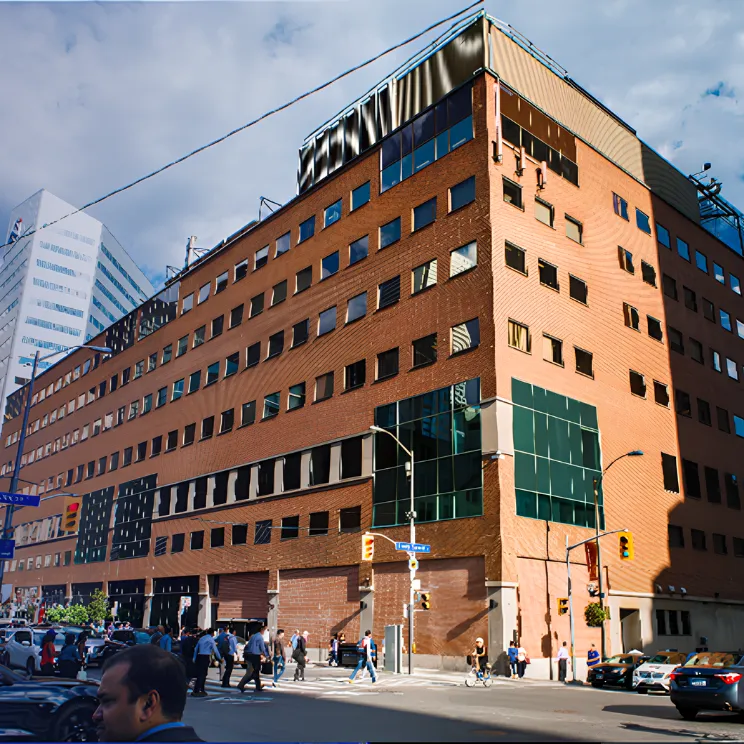

 About Us
 Careers
 Compliance
 Management Team
 Sustainablity
 Customer Portal
With several major sports events simultaneously taking place, millions of people are excitedly tuning in across various platforms and devices to watch and cheer for their favourite teams. Viewership has grown astronomically, creating unprecedented demands on broadcasters and streaming platforms. For example, one major international soccer tournament generated an estimated 5 billion engagements in 2022.
While traditional platforms were not designed for the level of traffic that major sporting events bring today, the question becomes: how do streaming and entertainment services manage enormous traffic surges? The answer? Hidden layers of technology and infrastructure are quietly working in the background to ensure viewers can watch these often once-in-a-lifetime moments without any interruption.
How Does the Game Get from the Stadium to Your Screen?
Fans don’t want to see a winning goal on social media before it appears on their screen. That’s why reducing latency is one of the most important parts of the streaming process. The process involves broadcasters moving footage from the stadium to content production facilities. They work in tandem with internet service providers (ISPs) and network service providers (NSPs) to minimize latency and deliver the content to audience.
To help manage these demands, broadcasters can deploy content within a colocation data centre. This approach allows for scaling up ahead of a major tournament and scaling down once it’s over without having to build permanent infrastructure to support these events. Telehouse Canada provides flexible colocation options so that customers can house their servers within our colocation facilities. The environment is designed to support latency-sensitive operations, enabling customers to scale seamlessly while maintaining high-performance connectivity.
As streaming requirements continue to grow, broadcasters often adopt a hybrid architecture that combines colocation and direct cloud services access. Latency-sensitive, high-throughput, or mission-critical workloads—such as live signal processing, encoding, and playout—are typically deployed in geographically proximate colocation facilities, where broadcasters retain full control over hardware configuration, network paths, and physical infrastructure.
This approach is complemented by cloud-based resources for scalability, remote collaboration, distribution, and burst capacity. To distribute the streaming content quickly, ISPs and NSPs enable the rapid transfer of raw footage to production teams. Additionally, through peering, the content can bypass a third-party intermediary route to exchange data and reduce overall latency while saving costs.
What Happens When Millions of People Start Streaming at Once?
Streaming and entertainment platforms rely on data centres with servers to store video files, provide multiple video quality formats and support requests when a viewer clicks “play”. However, managing millions of viewers simultaneously requires additional techniques. Have you ever noticed your stream temporarily drop from 4K to HD? Streaming providers use a process called bitrate streaming that automatically adjusts video quality based on network conditions and demand.
Beyond bitrate streaming, providers often use content delivery networks (CDNs), which place servers closer to viewers to reduce latency and improve performance. If millions of viewers tune in simultaneously, traffic can be rerouted to nearby locations to prevent congestion and maintain performance. Carrier-neutral data centres enable more efficient traffic routing by providing access to multiple independent network providers and on-site interconnection points. These diverse connectivity options, combined with physically separate network paths, allow traffic to be dynamically rerouted in response to congestion or network failures—reducing bottlenecks and maintaining consistent performance during periods of peak demand.
How Can Disruption Be Prevented?
To avoid outages during key moments, data centres implement built-in redundancy across critical systems to ensure continuous operation and prevent failures from disrupting service delivery for viewers. For example, Telehouse Canada provides a fully redundant physical infrastructure—including power, cooling, and diverse connectivity pathways-alongside access to a dense ecosystem of carriers, service providers, and cloud platforms, all supporting a 99.999% uptime SLA.
Ensuring resilient power infrastructure requires more than redundancy at a single level. Telehouse Canada’s sites include multiple backup generators that provide consistent power supply even during extended utility outages to mitigate disruption. Additionally, our sites consist of a 2N Uninterrupted Power Supply (UPS) System to maintain full power even during maintenance or equipment replacement. This is complemented by a 2N cooling infrastructure, ensuring consistent thermal performance and eliminating single points of failure across critical systems.
Similarly, connectivity is designed with the same level of resilience, incorporating diverse entry points, physically separated pathways, and access to multiple independent carriers and providers. This ecosystem diversity enables true connectivity redundancy, allowing customers to architect resilient, multi-provider solutions and avoid single points of dependency.
Together, all these measures support continuous uptime for latency-sensitive applications such as live streaming, broadcasting, and digital media delivery.
While streaming major sporting events and entertainment services is as simple as tapping on a phone or watching on the big screen, the process is far more complicated behind the scenes. It all relies on a combination of servers, fibre networks, distribution systems, and fully redundant networking, power, and cooling infrastructure.
The next time you stream a major sporting event on your phone, computer, or television, there’s a good chance you won’t think twice about what’s happening behind the scenes. Yet thousands of servers, networks, and interconnection points are working together in real time to make that experience possible.
Data centre and colocation providers like Telehouse Canada serve as the hidden backbone of streaming, entertainment, and countless digital services—combining resilient infrastructure with rich connectivity ecosystems to deliver content quickly and reliably. To learn more about how we can support your business goals, contact us today.