


 Colocation
 Data Centre Migration
 Remote Hands and Eyes
 Disaster Recovery
 Cross Connect
 Meet-Me Room (MMR)
 Access To Peering
 Cloud Connectivity
 Dedicated Internet Access
 Data Centre Interconnect
 AI Exchange
 151 Front Street West Data Centre


 About Us
 Careers
 Compliance
 Management Team
 Sustainablity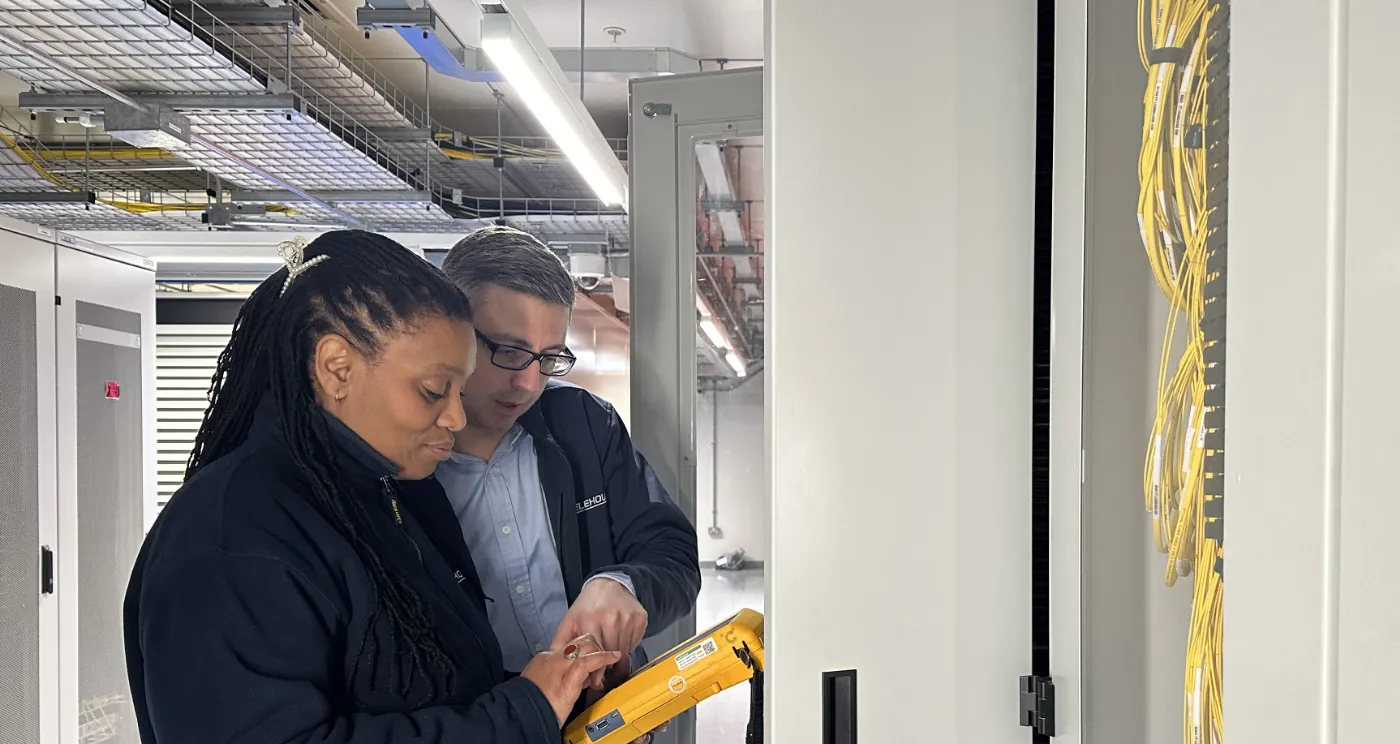
 Customer Portal
Andy Fenton, VP of Sales and Marketing at Telehouse Canada, and Alexander Ngai, Senior Manager of Business Planning at Telehouse Canada, recently participated in the Future of Data Centres in the GTHA and Ontario workshop, hosted by MaRS and Mantle Climate. The session brought together leaders from across energy, infrastructure, and policy to explore one critical question: how Ontario can meet rapidly growing AI compute demand while managing its impact on energy systems. The goal was to inform policy development and guide future project investments by identifying practical next steps for sustainable data centre growth in Ontario.
During the session we examined the barriers, opportunities, and system-wide impacts associated with each pathway. By creating collaboration between energy and digital infrastructure industries, we can better prioritize sustainable solutions.
To quantify the strategies and discussions from the stakeholder engagement sessions, MaRS released its report, Sharing the load: A look into how the projected expansion of AI infrastructure could strengthen Ontario’s energy systems, which examines the range of factors that may influence whether AI infrastructure growth could strengthen or strain the province’s energy systems and communities.
For our team, the report reinforced a central takeaway: the future of data centre growth in Ontario will depend on not just how much we build, but how we build it, and who we build it with. It’s clear that many stakeholders and policy makers are lacking direct interaction with key data centre users and owners. At Telehouse Canada, we will continue to play an active role in these conversations, but coordinated master planning across agencies, along with greater clarity in regulatory and permitting processes is needed. These workshops also highlighted that, with the right approach, this growth can serve as an opportunity to strengthen the broader energy system, not just add strain to it.
The Growing Tension Between Energy Systems and AI Infrastructure
There is no question that demand for AI infrastructure is accelerating. The federal government has signalled its goal to increase AI infrastructure development through both policy documents and funding programs as part of the 2025 budget’s Canadian sovereign AI Compute Strategy, and it’s clear why. AI compute power improves productivity in industries like manufacturing, healthcare, and transportation. Organizations that do not adopt AI risk falling behind in an increasingly competitive landscape.
As the report highlights, access to AI infrastructure is quickly becoming as fundamental as access to energy or transportation networks. However, AI data centres are among the most energy consuming form of development we have seen to date, requiring large, continuous loads of electricity. The Independent Electricity System Operator (IESO) estimates an additional 5,000 megawatts are required to meet the growing need for electricity by 2035, underscoring the scale of the challenge. AI data centre growth for training and inference, combined with electrification across transportation, heating and industrial processes, is placing increasing pressure on the province’s available energy capacity.
Turning a Challenge into an Opportunity: What Sustainable Data Centre Growth Looks Like in Practice
Investing in infrastructure presents both a challenge and opportunity to help deliver compute power while building out a more resilient energy system. A key focus of the workshops was identifying practical mitigation strategies that can reduce system impact while enabling continued growth.
Collectively, stakeholders explored approaches such as waste heat recovery, energy storage, demand response, clean power purchase agreements (PPAs), low-carbon construction, and on-site generation, each contributing to a more sustainable and balanced energy system.
Waste Heat Recovery:
- Waste heat recovery captures and repurposes excess heat generated by data centres, reducing overall energy waste. At Telehouse Canada, we leverage Enwave’s Deep Lake Water Cooling System (DLWC) to help redirect heat generated by our facilities to support the City of Toronto’s drinking water system.
Energy Storage:
- Lithium-ion batteries and advanced energy storage technologies can support with load shifting and grid stability, particularly during peak demand periods.
Demand Response:
- Demand response allows data centres to temporarily reduce power usage when called upon by utilities or grid operators, helping manage large, continuous loads more efficiently.
Clean Power Purchase Agreements (PPAs):
- Power purchase agreements (PPAs) enable organizations to purchase renewable energy at a fixed price over a defined period, helping manage cost volatility while advancing sustainability goals.
Low Carbon Construction:
- Emissions can be reduced at the construction stage through the use of sustainable materials and design strategies, including modular construction, efficient systems, and renewable energy integration.
On-site Generation:
- On-site generation allows facilities to produce electricity directly, reducing reliance on the grid and helping alleviate strain during peak demand.
While each of these strategies can deliver impact on its own, their effectiveness is strengthened when implemented together, highlighting the importance of coordination across the broader energy and infrastructure ecosystem.
Why Coordination is Critical to Enabling Responsible Growth
The workshops reinforced that technology alone is not enough to support sustainable data centre growth. Collaboration across developers, utilities, policymakers, data centre operators and communities will be critical.
The report highlights the need for co-located infrastructure, where energy systems and data centres are planned together from the outset, something that has not yet been implemented at scale in Ontario. It also points to the importance of policy alignment, streamlined permitting, and shared planning frameworks to reduce friction. In practice, this means moving away from siloed decision-making toward a more integrated, system-wide approach.
Looking ahead, leveraging policy tools is vital. The report highlights legislation such as Bill 40, Integrated Energy Plan for Generations, to fast-track initiatives that will improve sovereignty and deliver economic benefits whilst maintaining a clean, reliable and affordable system. The report demonstrates that pilot projects, including co-located data centre developments, are an essential way to test mitigation strategies in real-world environments. For example, impacts on grid reliability, community benefits, on-site generation, and more could help identify infrastructure constraints and inform future policy or practice.
Just as importantly, these workshops emphasized the need for ongoing collaboration through provincial forums that bring together energy and digital infrastructure stakeholders. These forums could exist as advisory committees or working groups supported by the government. Once the province determines its priorities, a provincial forum can be established to enable co-located infrastructure. By discussing evolving technology requirements, design standards, and market dynamics—and by proactively identifying emerging risks and opportunities—Telehouse Canada is positioned to contribute, through collaboration within this coordinating body, to the development of the next generation of sovereign digital infrastructure.
The Future of Data Centres workshops made one thing clear: Ontario is at a pivotal moment. Decisions made over the next decade will determine whether data centre growth places additional strain on the energy system or helps strengthen it. Achieving this balance will require coordination, innovation, and a shared commitment across industries.
Telehouse Canada will continue to play an active role in these conversations and industry collaboration, supporting responsible, future-ready digital infrastructure development.